
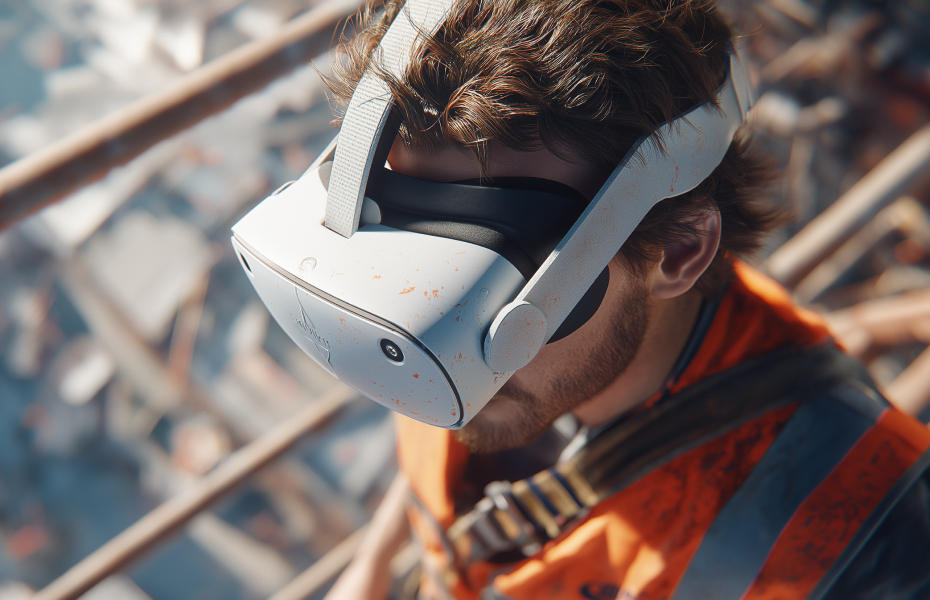
The benefits of virtual training are transforming how organizations approach employee development and workplace safety. If you're tired of watching employees zone out during PowerPoint presentations, or worried about the risks of hands-on training with dangerous equipment, you're not alone. Companies across industries are discovering that immersive learning delivers results that traditional methods simply can't match, from dramatically improved retention rates to significant cost savings over time.
Traditional training has its limits. Classroom sessions struggle to engage modern learners, on-the-job training can be dangerous and disruptive, and e-learning often fails to stick. Virtual reality training addresses these challenges head-on by placing learners directly into realistic scenarios where they can practice, fail, learn, and try again without any real-world consequences.
What Makes Virtual Training Different?
Virtual training uses VR technology to create immersive, interactive learning environments that simulate real-world situations. Unlike watching videos or reading manuals, trainees put on a headset and step into a three-dimensional space where they can interact with equipment, make decisions, and experience the consequences of their actions in real time.
The difference is engagement. When someone trains in VR, their brain responds as if they're actually in that environment. They're not passively absorbing information, they're actively doing the work, building muscle memory, and forming lasting neural connections that translate to better performance when it matters.
This isn't just theory. The technology has matured to the point where it's practical, affordable, and proven effective across dozens of industries, from healthcare and construction to manufacturing and retail.
Core Benefits of Virtual Training
Safety Without Compromise
One of the most compelling benefits of virtual training is the elimination of physical risk during the learning process. Employees can practice responding to fires, chemical spills, equipment failures, or emergency situations without anyone getting hurt. A mistake in VR means hitting restart, not filing an incident report.
This safety advantage extends beyond obvious hazards. New workers can familiarize themselves with complex machinery, practice confined space entry, or learn to work at heights, all while standing safely on solid ground. The psychological benefit is significant too, trainees build confidence in a controlled environment before facing real-world pressures.
Dramatically Improved Learning Retention
Research consistently demonstrates that experiential learning produces superior retention compared to passive methods. While traditional lectures result in retention rates around 5% and reading hovers near 10%, virtual training can achieve retention rates of 75% or higher.
The reason is straightforward. When you experience something in VR, your brain processes it similarly to a real experience. The emotional engagement, spatial awareness, and hands-on interaction create strong memory pathways that persist long after the training session ends. This means employees remember critical procedures when they need them most, whether that's weeks, months, or even years later.
Accelerated Skill Development
Virtual training compresses the learning curve significantly. Trainees can repeat complex procedures dozens of times in a single session, something that would be impractical or impossible with traditional methods. A worker learning to operate heavy equipment might complete months' worth of practice scenarios in just a few days.
The system provides immediate feedback on every action, helping learners correct mistakes instantly rather than reinforcing bad habits. This rapid iteration cycle, combined with the ability to adjust difficulty levels automatically, means employees reach competency faster and with greater confidence.
Cost Efficiency at Scale
While the initial investment in VR training systems requires capital, the long-term economics are compelling. Once content is developed, you can train unlimited employees without consuming materials, risking equipment damage, or taking production assets offline. Explore comprehensive VR safety training solutions that deliver measurable ROI.
Travel costs disappear when employees can train from any location with a headset. Equipment wear and tear from training vanishes. The hours spent by experienced workers supervising trainees drop dramatically. For organizations training hundreds or thousands of employees annually, these savings add up quickly.
Consistency Across All Locations
Every trainee receives identical instruction regardless of location, time, or trainer availability. The quality of training doesn't vary based on who's teaching or their mood that day. This standardization is particularly valuable for companies with multiple sites or high turnover rates, ensuring everyone meets the same competency standards.
The system tracks performance data consistently, making it easy to identify knowledge gaps across teams or locations. Managers can see exactly where training is working and where it needs improvement, using objective metrics rather than subjective assessments.
Engagement and Focus
Modern learners, particularly younger employees, respond far better to interactive experiences than passive instruction. VR training captures attention in ways that traditional methods struggle to match. The immersive nature of the technology eliminates external distractions, there's no checking phones or daydreaming when you're actively engaged in a virtual environment.
This heightened engagement translates directly to better outcomes. Trainees who are focused and interested learn faster, remember more, and perform better in real-world applications. The technology also makes training more enjoyable, which improves participation rates and reduces the feeling that training is just another box to check.
Measurable Performance Data
Virtual training systems generate detailed analytics on every aspect of performance. How long did each task take? Which steps were performed correctly? Where did mistakes occur? How many attempts were needed to master a skill? This granular data provides insights impossible to gather from traditional training methods.
Organizations can use this information to refine training programs, identify high-potential employees, demonstrate compliance, and prove training effectiveness to stakeholders. The ability to track improvement over time and compare performance across groups adds a level of accountability that drives continuous improvement.
Real-World Impact Across Industries
Manufacturing and Industrial
Factories use virtual training to teach equipment operation, assembly procedures, and quality control processes. Studies have shown that workers trained in VR demonstrate better real-world performance and fewer errors compared to those trained with traditional methods. New hires can practice on digital twins of actual production equipment, eliminating the risk of costly damage during the learning phase.
Healthcare and Medical
Hospitals and medical facilities leverage VR to train staff on rare procedures, emergency protocols, and patient interaction skills. Medical professionals can practice complex surgeries or crisis scenarios repeatedly, building competence and confidence before working with actual patients. The result is better patient outcomes and reduced medical errors.
Construction and Trades
Construction companies use immersive training to familiarize workers with job sites before they arrive, teach proper use of personal protective equipment, and simulate dangerous situations like working at heights or in confined spaces. This preparation reduces on-site accidents and helps workers recognize hazards they might otherwise miss.

Retail and Customer Service
Retail organizations create virtual store environments where employees practice customer interactions, learn product locations, and rehearse handling difficult situations. This preparation leads to better customer service, reduced stress for new employees, and fewer mistakes during busy periods.
Emergency Response
First responders train for disasters, accidents, and crisis situations that would be impossible or prohibitively expensive to recreate in real life. The ability to practice rare but critical scenarios ensures responders are prepared when seconds count.
Addressing Common Questions
Does VR Training Actually Work?
The evidence is overwhelming. Organizations implementing virtual training report significant improvements in knowledge retention, skill development, and real-world performance. The key is ensuring simulations are realistic and aligned with actual job requirements. When done well, skills learned in VR transfer effectively to real-world situations.
Is It Too Expensive for Smaller Organizations?
The cost of VR training has dropped dramatically in recent years. Standalone headsets are now available for a few hundred dollars each, and cloud-based training platforms eliminate the need for expensive infrastructure. For organizations training even a few dozen employees annually, the ROI often justifies the investment within the first year.
Will Employees Resist the Technology?
Most employees, especially younger workers, embrace VR training enthusiastically. The technology is intuitive and engaging, and most people adapt within minutes. For those hesitant about new technology, the benefits become obvious once they experience it firsthand. Learn more about implementing VR training programs effectively in your organization.
Can It Replace All Traditional Training?
Virtual training works best as part of a comprehensive approach that includes classroom instruction, mentoring, and supervised real-world practice. It excels at building specific skills and knowledge but should complement rather than completely replace other training methods. The ideal mix depends on what you're teaching and your organizational needs.
Maximizing the Benefits
To get the most from virtual training, start with clear objectives. Identify the specific skills or knowledge gaps you're trying to address. Focus on areas where traditional training is most challenging, dangerous, or expensive.
Invest in quality content that accurately reflects your work environment and procedures. Generic training modules are better than nothing, but customized simulations that mirror your actual equipment and processes deliver the best results.
Train your trainers. Someone needs to understand how to set up sessions, interpret performance data, and guide trainees through the experience. The technology is user-friendly, but having knowledgeable facilitators enhances effectiveness.
Integrate VR training into your existing programs rather than treating it as a standalone solution. Use it to supplement classroom learning, provide refresher training, or assess competency before moving to supervised real-world practice.
Collect and analyze the performance data. The insights you gain will help refine your training programs and demonstrate value to stakeholders. Use the metrics to identify trends, celebrate improvements, and address persistent challenges.
The Future of Virtual Training
The technology continues to evolve rapidly. Artificial intelligence is creating adaptive training scenarios that respond intelligently to individual trainee performance. Mixed reality options blend physical and virtual elements for even more realistic experiences. Haptic feedback systems add the sense of touch, making simulations feel increasingly real.
As costs decrease and capabilities expand, virtual training will become standard practice across industries. Organizations that adopt early gain competitive advantages in workforce development, safety performance, and operational efficiency. The question isn't whether to implement virtual training, but how quickly you can start realizing the benefits.
Cloud-based platforms are making deployment easier, eliminating technical barriers that once required dedicated IT support. Social features enable collaborative training exercises where teams practice together regardless of physical location. The barriers to entry keep dropping while the benefits keep growing.
Conclusion
The benefits of virtual training extend far beyond novelty or technology for its own sake. This approach to learning delivers measurable improvements in safety, skill development, retention, and cost efficiency.
From eliminating training-related injuries to accelerating time-to-competency to providing consistent instruction across global operations, VR training addresses real challenges that organizations face every day.
As the technology becomes more accessible and proven results accumulate across industries, the benefits of virtual training make it an essential tool for any organization serious about developing a capable, confident, and safe workforce.
Frequently Asked Questions (FAQs)
1. How long does it take to see results from virtual training?
Most organizations notice immediate improvements in trainee engagement and satisfaction. Measurable performance improvements typically appear within the first few training cycles, often within weeks of implementation.
Long-term benefits like reduced accident rates and improved operational efficiency become apparent over 3 to 6 months as trained employees apply their skills in real-world situations. The data tracking built into VR systems lets you monitor progress continuously and demonstrate ROI to stakeholders.
2. What types of skills work best with virtual training?
Virtual training excels at teaching procedural skills, equipment operation, hazard recognition, emergency response, and spatial awareness tasks. It's particularly effective for scenarios that are dangerous, expensive, or difficult to recreate in real life.
Soft skills like customer service, leadership, and communication also benefit from VR's ability to create realistic interpersonal scenarios. The technology works less well for teaching purely theoretical concepts or information that requires extensive reading, though it can supplement these areas effectively.
3. Can we create custom training content for our specific needs?
Absolutely. Many organizations start with off-the-shelf training modules and gradually develop custom content as they identify specific needs. You can work with VR development specialists to create simulations that exactly match your equipment, facilities, and procedures.
Some platforms also offer tools that let you build basic scenarios without coding knowledge. The investment in custom content typically pays off quickly for training that you'll use repeatedly with many employees.
4. How do we measure the effectiveness of our VR training program?
VR training systems automatically track detailed performance metrics including completion times, error rates, decision quality, and mastery levels. You can compare these metrics to baseline data from traditional training or track improvement over time.
Beyond the built-in analytics, measure real-world outcomes like reduced accident rates, faster time-to-competency for new hires, decreased equipment damage during training periods, and improved performance in practical assessments. Employee surveys also provide valuable feedback on engagement and confidence levels.
5. What happens if trainees experience motion sickness or discomfort?
Modern VR systems have largely solved motion sickness issues through improved hardware and thoughtful software design. Most users adapt within minutes and experience no discomfort.
For the small percentage who are sensitive, several strategies help, shorter initial sessions to build tolerance, choosing training content with minimal rapid movement, taking breaks between scenarios, and ensuring proper headset fit. The discomfort typically decreases with repeated exposure. Organizations can also start with less immersive content and gradually increase complexity as users become comfortable with the technology.
Author:

Share Article:
Author:
Share Article: