
Construction safety management is something every site manager, principal contractor, and worker should care about deeply, but too often it gets reduced to paperwork and tick-box exercises. If you have ever wondered whether your crew really absorbs what they learn during a standard induction, you are not alone.
Construction remains one of the most dangerous industries. Falls, struck-by incidents, electrical contact, and collapses still cause a significant number of serious injuries and fatalities every single year.
The old ways of training and managing safety are starting to show their limits. That is where a smarter approach, one that blends solid safety fundamentals with immersive technology like virtual reality, can make a real difference.
Why Construction Safety Management Matters
Work Health and Safety (WHS) laws place clear duties on anyone who manages or controls construction work. A person conducting a business or undertaking (PCBU) must eliminate risks where possible, or minimize them as far as reasonably practicable.
Safe Work data consistently shows that construction workers face disproportionately high rates of workplace fatalities compared to most other sectors.
Beyond the legal obligations, poor safety practices lead to project delays, increased insurance costs, compensation claims, and, most importantly, preventable harm to people. Getting construction safety management right is not optional. It is a baseline requirement for operating responsibly.
Common Safety Risks on Construction Sites
Construction sites are dynamic environments where hazards change daily. Some of the most common risks include falls from heights, being struck by moving plants or falling objects, electrical hazards, trenching and excavation collapses, exposure to hazardous substances, and manual handling injuries.
High-risk construction work, as defined under WHS regulations, includes tasks like working at heights above two meters, demolition, work in confined spaces, and work near energized electrical installations.
Each of these hazards demands specific controls, and the people on site need to understand both the risks and the correct response. This is where traditional classroom-based training often falls short, because sitting through a slide deck about fall protection is not the same as experiencing what it feels like to be in a high-risk situation.
Platforms like Next World are addressing this gap by offering VR health and safety modules that let workers practise responding to realistic scenarios without actual danger.
How Hazards Are Identified and Risks Assessed
Effective safety management in construction starts with identifying hazards before work begins. This involves site inspections, reviewing incident history, consulting workers, and analyzing the specific tasks planned for each phase of a project.
Once hazards are identified, risks are assessed by considering how likely an incident is and how severe the consequences could be.
The hierarchy of control guides the response. Elimination sits at the top, meaning you remove the hazard entirely.
If that is not possible, you move through substitution, engineering controls, administrative controls, and finally personal protective equipment (PPE) as a last line of defense. A solid understanding of hazard identification processes is essential for anyone involved in managing site safety.
For high-risk construction work, Safe Work Method Statements (SWMS) are required. A SWMS outlines the work activity, identifies hazards, describes the control measures, and assigns responsibilities. It is a living document, meaning it should be reviewed and updated whenever conditions change.
What Goes Into a Construction WHS Management Plan
Under WHS regulations, a WHS Management Plan is required for any construction project where a principal contractor has been appointed and the total cost of the construction work is $250,000 or more. This plan is not just a formality. It serves as the central safety document for the project.
A construction WHS management plan should include the names and roles of people with safety responsibilities, site-specific hazards and their control measures, arrangements for workplace inductions, procedures for incident reporting, and emergency management plans. The plan should also address how subcontractors will be coordinated to prevent overlapping work from creating new risks.
Managing emergencies on construction sites requires clear procedures for evacuation, communication, first aid, and reporting. Workers need to know where assembly points are, how to raise an alarm, and who accounts for everyone on site.
Practicing these procedures through realistic drills, including VR-based evacuation drills, helps workers build instinctive responses that save lives when seconds matter.
Construction Safety Management on Site
Before anyone sets foot on a construction site, they need to go through a site-specific induction. This covers the layout of the site, emergency procedures, specific hazards, PPE requirements, and key contacts. The goal is to make sure every person understands the risks they will face and the rules they need to follow.
Toolbox talks are short, focused safety discussions held on site, usually at the start of a shift or before a new task. They keep safety front of mind and give workers a chance to raise concerns.
Topics might include working near overhead power lines, managing dust exposure, or scaffolding inspection. When done well, toolbox talks create an open culture where people speak up about hazards instead of staying quiet.
Training and supervision are ongoing responsibilities. Workers need competency-based training for the tasks they perform, and supervisors must be engaged enough to spot unsafe behavior before it leads to an incident.
PPE requirements vary depending on the task but commonly include hard hats, high-visibility clothing, steel-cap boots, eye protection, hearing protection, and respiratory equipment.
Monitoring and Improving Safety Performance
Safety performance on construction sites does not stop once a plan is written and workers are inducted. Ongoing monitoring is critical, including regular site inspections, safety audits, and a structured system for reporting incidents and near-misses.
Near-miss reports are particularly valuable because they reveal hazards that could have caused harm, giving you the chance to fix problems before someone gets hurt.
Improving safety over time requires analyzing trends in incident data, seeking worker feedback, reviewing the effectiveness of controls, and updating procedures. This cycle of continuous improvement sits at the heart of a mature safety culture. Organizations that commit to it see measurable reductions in incident rates.

Who Is Responsible for Construction Safety
Construction safety management is a shared responsibility, but not an equal one. Under WHS laws, the principal contractor carries primary duty for safety on a construction project. This includes preparing the WHS management plan, coordinating safety among subcontractors, and ensuring that site-specific inductions are completed.
A construction safety manager typically oversees the day-to-day implementation of safety systems, including risk assessments, incident investigations, training programs, and regulator liaison. Workers also have a duty to take reasonable care for their own safety and the safety of others, follow instructions, and report hazards.
How VR Training Is Changing the Game
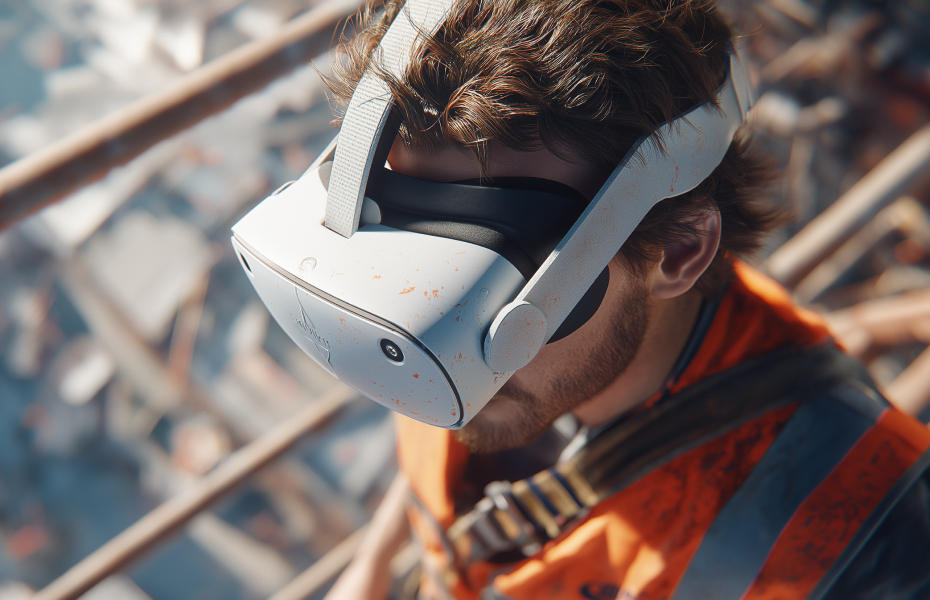
Traditional training methods, while necessary, often struggle with engagement and retention. Workers sit through presentations, watch videos, and complete assessments. But research consistently shows that people retain information better when they learn by doing. VR training bridges that gap by placing workers in immersive, realistic scenarios where they practice identifying hazards, responding to emergencies, and following procedures, all without real-world consequences.
For construction specifically, VR lets workers experience situations like a fall from scaffolding, a trench collapse, or an electrical contact incident in a controlled environment.
They build muscle memory and confidence, make mistakes safely, and learn from them immediately. The data from VR platforms also gives managers measurable insights into individual competency, highlighting gaps that traditional training might miss.
Immersive training is not about replacing existing safety systems. It is about strengthening them by making safety skills training more effective, more engaging, and more memorable.
Frequently Asked Questions (FAQs)
1. What Is Construction Safety Management?
Construction safety management is the systematic process of identifying hazards, assessing risks, implementing controls, and monitoring safety performance on construction projects. It covers everything from planning and induction through to ongoing inspections and incident reporting.
2. Who Is Responsible for Construction Safety on Site?
The principal contractor holds the primary duty under WHS laws. However, safety is a shared responsibility extending to project managers, site supervisors, subcontractors, and individual workers. Everyone on site has a role to play.
3. What Is Included in a Construction Safety Management Plan?
A construction safety management plan typically includes site-specific hazard identification, risk controls, emergency procedures, roles and responsibilities, induction arrangements, incident reporting processes, and subcontractor coordination plans.
4. How Does VR Improve Construction Safety Training?
VR allows workers to practice safety procedures in realistic, immersive environments without exposure to actual danger. It improves knowledge retention, builds muscle memory for emergency responses, and provides measurable competency data.
5. Why Is Construction Safety Management Important?
The construction industry has one of the highest workplace fatality rates. Effective construction safety management protects workers, reduces legal and financial risks, ensures WHS compliance, and supports a culture where everyone goes home safe. That is what makes construction safety management worth getting right.
Author:

Share Article:
Author:
Share Article: