
Construction safety videos have been a training staple on job sites for decades. They are affordable, easy to distribute, and capable of communicating essential safety information to large groups of workers at once. For many organizations, video-based training represents the backbone of their safety education program.
But as the industry faces increasing pressure to reduce incident rates and demonstrate genuine worker competency, the limitations of video as a stand alone training method are becoming harder to ignore. Virtual reality training addresses those limitations directly, offering an immersive, hands-on alternative that produces measurably stronger safety outcomes.
What Safety Videos Do Well in Construction
Video-based training deserves credit for the genuine value it provides. A well-produced safety video can illustrate hazardous scenarios that would be dangerous or impractical to recreate in a classroom.
It can show workers the correct way to inspect a harness, the consequences of an unsecured load, or the proper sequence for entering a confined space. The visual format makes complex procedures easier to follow than written instructions alone, and it accommodates workers with varying literacy levels.
Videos also offer consistency. Every worker who watches a particular module receives the same content, delivered the same way. This eliminates the variability that comes with different trainers and different delivery styles. For organizations managing multiple sites, this consistency simplifies compliance tracking and ensures a baseline standard of training across the workforce.
The cost advantages are real as well. Once a video is produced, it can be reused indefinitely without additional expense. It can be distributed to remote sites, played on mobile devices, and scheduled around shift patterns without requiring an instructor to be present. These practical benefits explain why construction safety videos remain so widely used.
Where Video-Based Training Falls Short
Despite these strengths, video training has a fundamental limitation that no amount of production quality can overcome, it is a passive medium. Workers watch, listen, and perhaps answer a few multiple-choice questions at the end. They are not required to make decisions, perform procedures, or respond to changing conditions. The learning experience is observational rather than experiential.
This passivity has a direct impact on retention. Research consistently shows that passive learning methods produce significantly lower retention rates than active, hands-on approaches. Workers may recall key points immediately after watching a video, but that knowledge fades rapidly without reinforcement through practice.
The gap between watching someone else perform a safety procedure and being able to perform it yourself under pressure is substantial, and it is exactly this gap that contributes to incidents on site.
Video also cannot assess genuine competency. A worker can watch a video on lockout tagout procedures and pass a written quiz without ever demonstrating they can perform the sequence correctly on real equipment.
The quiz confirms they absorbed information. It does not confirm they can apply it under pressure. For safety managers who need to know whether their workforce is truly prepared, this distinction matters enormously.
Another limitation is contextual relevance. A generic safety video on fall protection may cover the principles adequately, but it cannot replicate the specific conditions of the site where workers will be operating. The scaffolding layout, the anchor point locations, and the environmental conditions are all absent from a standard video. Workers are left to bridge that gap themselves on site.
How VR Training Overcomes These Limitations
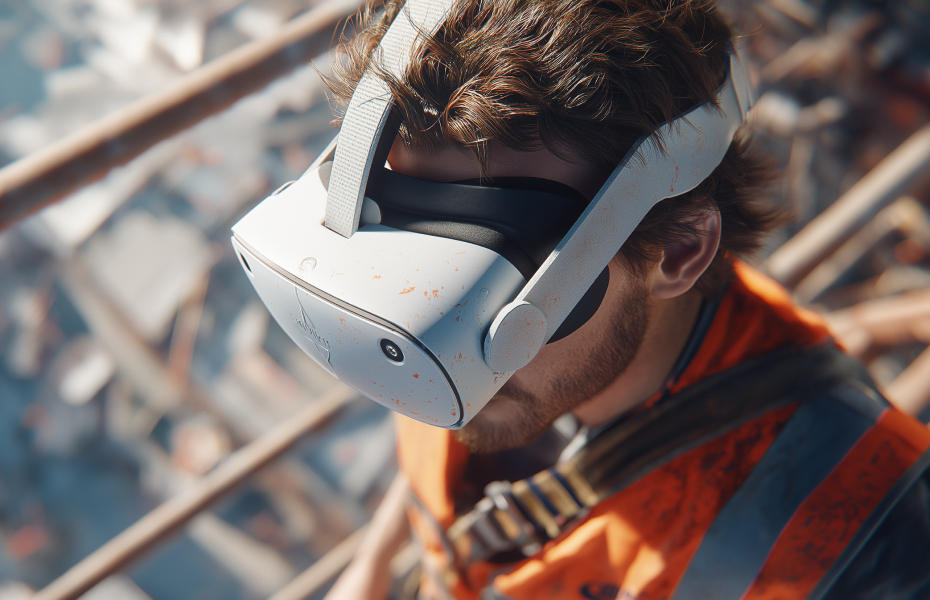
Virtual reality training directly addresses every weakness that video-based training presents. Instead of watching a scenario unfold on screen, workers step inside it. They wear a headset and interact with a three-dimensional simulation of their work environment, making decisions, performing procedures, and experiencing the consequences of their actions in real time.
The shift from passive viewing to active participation transforms retention. Studies show that immersive, experiential learning produces retention rates around seventy-five to eighty percent, compared to the much lower rates associated with watching videos or attending lectures.
Workers remember what they practiced because the experience engaged their decision-making, motor skills, and emotional responses simultaneously.
VR also solves the competency assessment problem. Every action a worker takes during a simulation is tracked and recorded. Safety managers can see which hazards were identified, which steps were completed correctly, and how the worker responded under pressure.
This data provides genuine evidence of competency rather than a simple pass or fail on a knowledge test. When paired with a structured health and safety training program, VR creates a complete system for developing and verifying workforce readiness.
The contextual relevance improves dramatically as well. VR simulations can be designed to replicate specific site conditions, equipment layouts, and hazard profiles. A worker preparing for a particular project can train in a virtual version of that environment before they ever set foot on the real site. This targeted preparation produces a level of readiness that no generic video can match.
Practical Comparison Across Key Training Areas
The difference between video and VR becomes most apparent in the training areas where practical skill matters most.
For fall protection training, a video can explain harness inspection procedures and demonstrate correct anchor point selection.
VR allows workers to physically inspect virtual harnesses, identify defects, select anchor points on a realistic elevated platform, and experience what it feels like to work at height. The hazard safety training provided through VR builds the situational awareness that a video simply cannot develop.
For confined space entry, a video can walk through the permit-to-work process and atmospheric monitoring requirements. VR places workers inside a virtual confined space where they must check permits, test atmospheres, use retrieval systems, and respond to alarms. The procedural confidence built through this hands-on practice translates directly to safer performance in real confined spaces.
For emergency response, including evacuation drills and fire response, a video can outline the steps to follow during an emergency.
VR puts workers into a simulated emergency where they must make quick decisions under pressure, select the correct fire extinguisher class, and navigate evacuation routes while conditions change around them. This rehearsal builds the speed and confidence that real emergencies demand.
Making the Transition From Video to VR
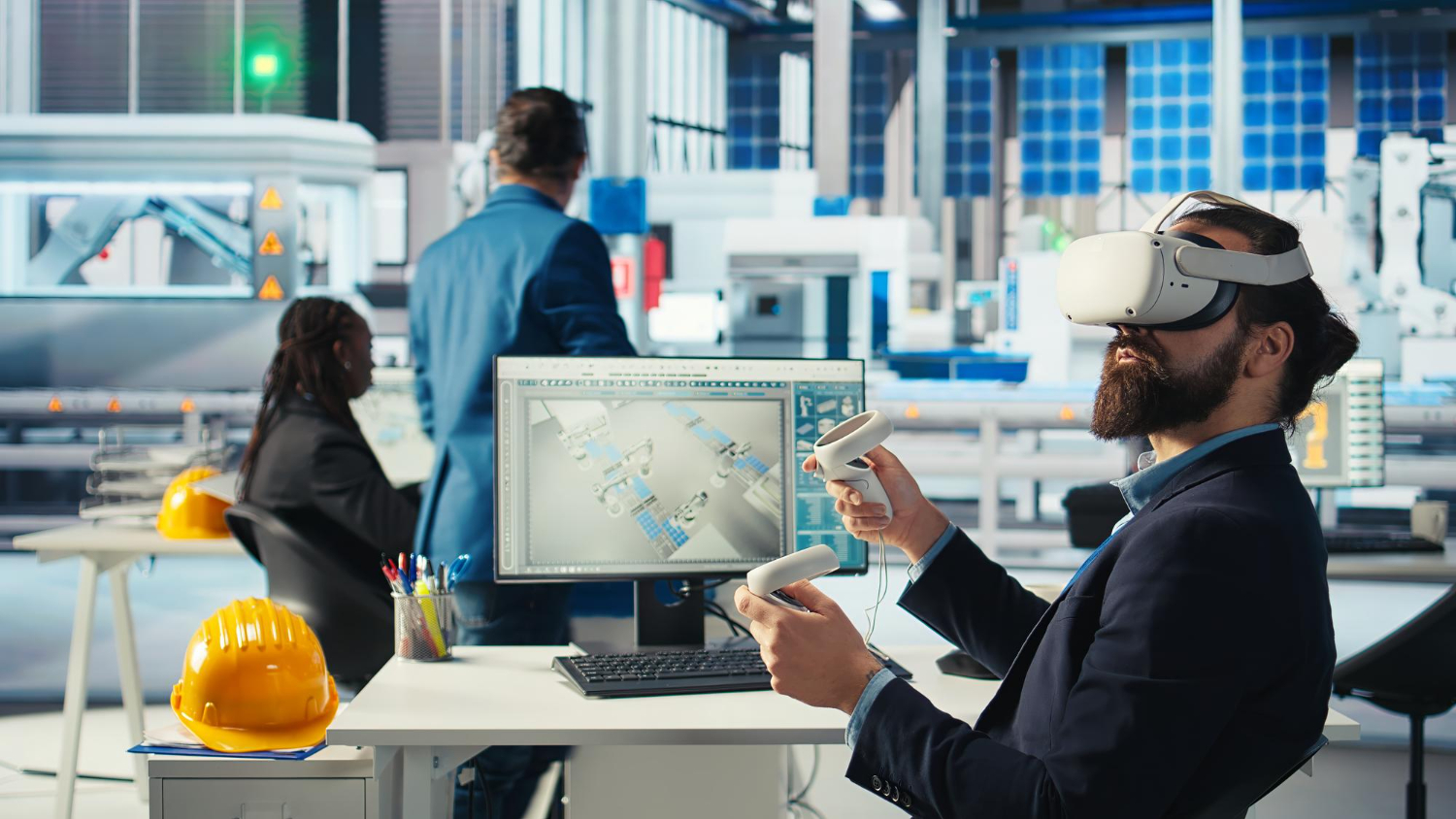
Moving from video-based training to VR does not mean discarding everything you already have. The most effective approach uses both methods strategically, recognizing what each does best.
Construction safety videos remain useful for initial awareness and orientation. They can introduce new workers to site-specific rules, general safety expectations, and company policies efficiently. They work well for low-risk topics where knowledge transfer is sufficient and hands-on practice is not critical.
VR should be deployed where practical competency is essential, high-risk activities, complex procedures, emergency response, and any task where the consequences of poor execution are severe.
Start with the hazards that appear most frequently in your incident data and near-miss reports. These are the areas where the shift from passive to active training will produce the most immediate reduction in risk.
As your program matures, integrate VR performance data into your broader safety management system. The competency records generated by VR sessions support audit readiness and regulatory compliance while giving safety leaders the insight they need to target coaching and continuous improvement.
Aligning this data with your QHSE management systems creates a training framework where every decision is informed by evidence rather than assumption. Platforms like Next World provide the immersive modules and performance tracking that make this evidence-based approach practical for organizations of any size.
Frequently Asked Questions (FAQs)
1. Are Construction Safety Videos Still Effective?
Video-based safety training is effective for basic awareness and orientation purposes. It communicates essential information consistently and affordably. However, videos are limited in their ability to build practical skills, assess genuine competency, or prepare workers for the physical and cognitive demands of high-risk tasks.
2. What Can VR Training Do That Videos Cannot?
VR training allows workers to actively participate in realistic safety scenarios rather than passively watching them. Workers make decisions, perform procedures, and experience consequences in a simulated environment. VR also tracks individual performance data, providing measurable evidence of competency that video-based assessments cannot deliver.
3. Is VR Training More Expensive Than Video Training?
VR requires a higher initial investment in hardware and content development. However, the improved retention, reduced incident rates, and genuine competency data it produces often deliver a stronger return over time. Many organisations find that VR reduces the overall cost of safety training by decreasing the frequency of retraining and lowering incident-related expenses.
4. Can VR and Video Be Used Together in a Safety Program?
VR and video complement each other effectively. Use videos for initial orientation, awareness topics, and low-risk subjects. Deploy VR for high-risk tasks, procedural training, and competency assessment. This blended approach provides both broad coverage and deep skill development.
5. How Do Workers Respond to VR Training Compared to Construction Safety Videos?
Workers consistently report higher engagement and satisfaction with VR training compared to video-based methods. The interactive, immersive nature of VR captures attention more effectively and creates memorable learning experiences.
Research shows that workers trained through VR demonstrate greater confidence in applying safety procedures on site, which is why more organizations are moving beyond construction safety videos to embrace immersive learning.
Author:

Share Article:
Author:
Share Article: