
Corporate learning programs consistently fail to deliver the behavior change organizations need. Research shows that only 12% of employees apply skills from training to their actual jobs, while 90% of training content has no lasting impact on professional behavior.
The problem is not a lack of training investment. The problem is that most corporate learning is designed around information transfer rather than behavior change, and these are fundamentally different outcomes that require fundamentally different approaches.
The Information Dump Problem
Traditional corporate learning operates on a flawed assumption: that providing information automatically produces behavior change. Programs deliver content through presentations, videos, and e-learning modules, assuming that employees who understand concepts will naturally apply them. This assumption ignores how behavior actually forms and changes.
The human brain can effectively store only five to nine pieces of information in working memory at any time. When training programs dump hours of content into single sessions, they overwhelm this limited capacity.
Cognitive overload triggers anxiety and avoidance behavior, meaning employees disengage mentally before the session even ends. The information they cannot process simply disappears.
Research demonstrates that employees forget 50% of new information within an hour, 70% within 24 hours, and up to 90% within a month. This forgetting curve applies regardless of how well the original content was designed.
Without reinforcement and application, training content evaporates from memory before employees have a chance to use it. The organization paid for training that produced no lasting capability.
The workplace environment compounds the problem. Employees return from training to existing habits, pressures, and workflows that override new learning. Even workers who genuinely intend to apply new skills find themselves reverting to familiar patterns within days. The training occurred, but no behavior changed.
Why Behavior Change Requires Different Design
Behavior change does not happen through information exposure. It happens through practice, repetition, environmental support, and consequence. Corporate learning programs that focus exclusively on knowledge transfer miss every mechanism that actually produces lasting change.
Practice builds procedural capability that passive learning cannot create. Reading about hazard identification teaches employees what to look for. Actually practicing hazard recognition in realistic scenarios builds the pattern recognition and response capability that transfers to real work.
The difference is not subtle. It is the difference between knowing about a skill and being able to perform it.
Repetition strengthens neural pathways through use. Single training events create weak memory traces that fade rapidly. Spaced repetition distributed across weeks and months builds durable capability that persists.
Effective corporate learning incorporates ongoing practice rather than treating training as a one-time event that ends when the session concludes.
Environmental support determines whether new behaviors survive contact with the workplace. If employees learn communication techniques but return to departments that reward silence, the new skills will be suppressed regardless of training quality.
Behavior change is most effective when entire teams go through transformation together, creating new social norms that reinforce rather than undermine learning.
Consequence drives adoption. If there is no reward for applying new skills and no consequence for sticking to old habits, the brain takes the path of least resistance. Corporate learning programs must connect to performance systems that make new behaviors matter.
The Transfer Problem in Practice
The transfer problem describes the tendency of training participants to fail to transfer skills acquired during training to the workplace. This problem is not a minor inefficiency. It is the central challenge that determines whether corporate learning investments produce returns or waste resources.
Studies examining transfer rates across industries consistently find the same pattern: training produces temporary knowledge gains that disappear without application. Workers score well on assessments immediately after sessions but cannot perform trained skills weeks later. The training satisfied compliance requirements but failed to build lasting capability.
General hazard awareness training illustrates the transfer challenge clearly. Employees can identify hazards correctly on tests administered right after training.
Months later, those same employees walk past obvious hazards on job sites because the recognition capability was never developed to the point of automatic application. They knew hazards existed in the abstract but could not recognize specific hazards in practice.
The transfer problem intensifies when training context differs significantly from application context. Classroom learning optimized for calm, distraction-free environments produces capabilities suited for those conditions.
When employees must apply skills under time pressure, competing priorities, and workplace stress, the calm-context training often fails to transfer.
Designing Training That Changes Behavior
Effective corporate learning looks fundamentally different from information-focused programs. The design centers on producing specific, observable behaviors rather than conveying general knowledge.
Start by defining exactly what behaviors you want to see. Vague goals like improving safety awareness or enhancing communication produce vague results. Specific behaviors like conducting pre-task hazard assessments before every job or escalating concerns within 24 hours provide clear targets that training can build toward and measurement can verify.
Replace passive content with active simulation that requires employees to practice target behaviors during training. If the training does not force participants to act differently during the session, they are unlikely to act differently afterward.
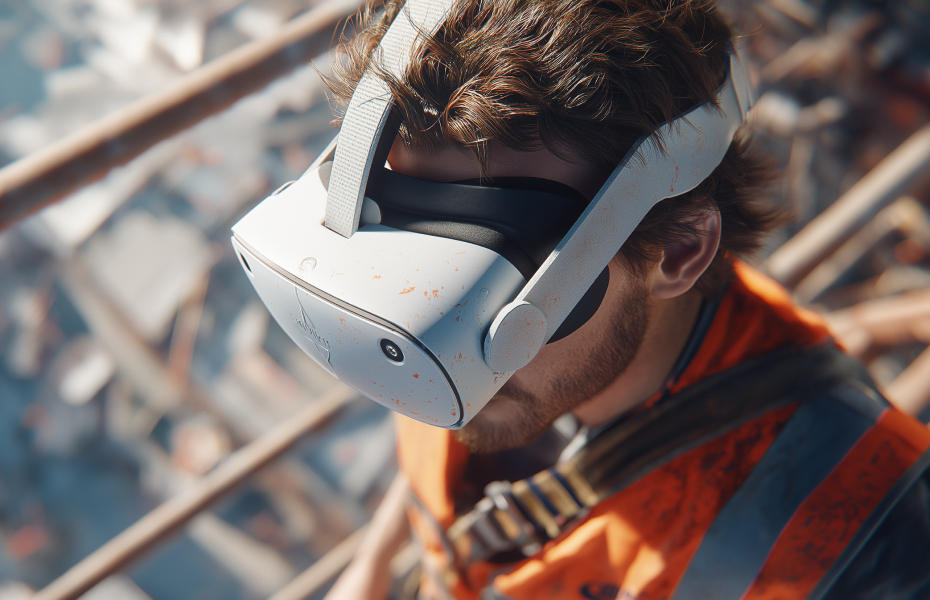
Immersive learning environments enable this practice by placing workers in realistic scenarios where they must execute procedures rather than simply learn about them.
Build failure into the learning process. Workers need to make mistakes in safe environments before they face real consequences. This failure-and-retry cycle builds resilience and adaptability that passive learning cannot produce.
When workers have already failed and recovered multiple times in training, they can handle unexpected situations more effectively on the job.
Extend learning beyond single events through reinforcement programs. The day training ends is when the real work begins. Without manager reinforcement, learning decay starts within 48 hours. Structured follow-up that prompts application, provides feedback, and connects to consequences transforms temporary knowledge into lasting behavior change.
Measuring What Matters in Training
Traditional metrics fail to capture whether training produces behavior change. Completion rates show that employees attended training. Satisfaction scores show that they enjoyed it. Neither metric predicts whether behavior actually changed.
Kirkpatrick's model provides a framework for measuring what matters. Reaction measures satisfaction. Learning measures knowledge acquisition. Behavior measures whether participants changed what they do on the job.
Results measures impact on organizational performance. Most training programs measure only the first two levels while the last two determine actual value.
Performance-based assessment reveals whether training produced executable capability rather than abstract knowledge. Instead of asking workers to select correct answers, require them to demonstrate procedures. Track whether target behaviors appear in actual work rather than whether workers can describe those behaviors.
QHSE management systems enable continuous monitoring that connects training to outcomes. When organizations track safety observations, hazard reports, incident rates, and near-miss data over time, they can measure whether training investments actually changed behavior.
These leading indicators reveal capability gaps before lagging indicators like injuries expose them.
Return on investment calculations become meaningful only when organizations measure behavior change and business results rather than training activity. A program that costs more but produces lasting behavior change delivers better ROI than a cheaper program that produces no change at all.

Building a Learning Culture That Sustains Change
Behavior change is a marathon rather than a sprint. Individual training events cannot compete with the daily environment that shapes how employees actually work. Lasting change requires building learning into organizational culture rather than treating it as an occasional event.
Continuous learning environments integrate development into daily work rather than pulling employees away for separate training activities. When learning happens in the flow of work through practice opportunities, feedback loops, and accessible resources, it becomes sustainable rather than disruptive.
Manager involvement multiplies training impact. Research shows that managers account for 70% of the variance in team engagement, and this influence extends to learning adoption. When managers reinforce training, model target behaviors, and hold teams accountable, change spreads faster and lasts longer.
Next World delivers VR-based corporate learning modules designed specifically for behavior change, using active practice, realistic scenarios, and measurable outcomes to transform how organizations develop workforce capability.
Frequently Asked Questions (FAQs)
1. Why Does Most Training Fail to Change Behavior?
Most programs focus on information transfer rather than behavior change. They assume that employees who understand concepts will automatically apply them, ignoring how behavior actually forms through practice, repetition, environmental support, and consequence.
Without these elements, training produces temporary knowledge that disappears without lasting impact.
2. How Can Organizations Measure Whether Training Actually Works?
Move beyond completion rates and satisfaction scores to measure behavior change and business results. Track whether target behaviors appear in actual work, monitor leading indicators like safety observations and hazard reports, and connect training to outcome metrics.
Performance-based assessments that require demonstration rather than recognition reveal actual capability.
3. What Is the Transfer Problem in Training?
The transfer problem describes the failure of training participants to apply learned skills in the workplace. Studies show that 88% of employees do not apply training to their jobs, and most training content is forgotten within weeks. Transfer fails when training context differs from application context and when workplace environments do not support new behaviors.
4. How Does Active Practice Improve Training Outcomes?
Active practice builds procedural capability that passive learning cannot create. When employees must execute skills during training rather than simply learn about them, they develop the motor memory, decision patterns, and response capability that transfer to real work. Practice also reveals gaps that passive assessment cannot detect.
5. What Role Do Managers Play in Making Training Effective?
Managers account for 70% of the variance in team engagement and significantly influence whether training produces lasting change.
When managers reinforce learning, model target behaviors, provide feedback, and hold teams accountable for applying new skills, behavior change spreads faster and persists longer than when corporate learning exists in isolation from daily management.
Author:

Share Article:
Author:
Share Article: