
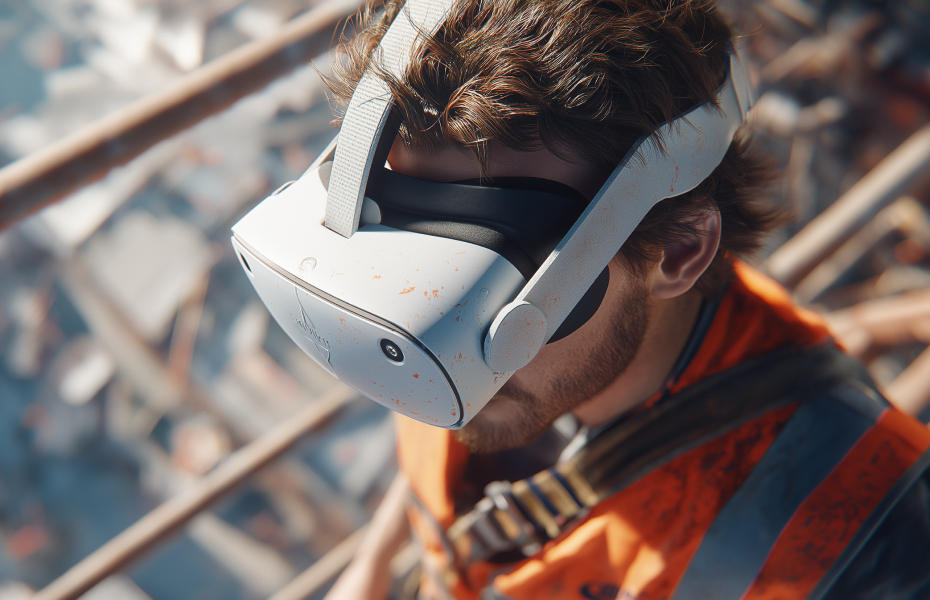
Immersive training is completely changing how we develop skills. Honestly, it's about time. I've watched countless organizations struggle with traditional training methods. These leave people unprepared for real-world challenges. You know the feeling. Sitting through another PowerPoint presentation. Wondering how any of this will help when you're actually on the job.
The truth is, most training fails because it doesn't bridge the gap between theory and practice. That's where immersive training comes in. It uses cutting-edge technology to create experiences that feel real. They stick in your memory. They actually prepare you for what's coming.
What is Immersive Training
Think of immersive training as the difference between reading about riding a bike and actually getting on one. It's a learning approach that uses virtual reality, augmented reality, and other technologies. These create realistic simulations where people can practice skills without real-world consequences.
Instead of passive learning, you're actively doing. Instead of imagining scenarios, you're living them. The technology puts you right in the middle of situations you'll face on the job. You can make mistakes, learn from them, and build muscle memory that translates to real performance.
Virtual Reality in Skill Building
Virtual reality takes skill building to another level. It creates completely controlled environments where anything is possible. You can practice complex procedures hundreds of times. You can face rare emergency situations. You can work with expensive equipment without the usual risks and costs.
I've seen medical students perform virtual surgeries before they ever touch a real patient. They build confidence, develop steady hands, and learn from mistakes. These would be catastrophic in real life. That's the power of VR. It gives you permission to fail safely while building the skills you need to succeed.
Benefits of Immersive Training
The benefits go way beyond just being "cool technology." When done right, immersive training solves real problems. These have plagued traditional training for decades.
Engagement and Retention
People remember what they do, not what they hear. When you're actively participating in a simulation, your brain processes information differently. This is different from passively listening to a lecture.
Research indicates significantly higher retention rates with hands-on, immersive learning compared to passive training methods. That's not just a slight improvement. That's a complete transformation of how effectively people learn.
Safe Practice for High-Risk Skills
Some skills are too dangerous to practice in real life until you're already good at them. That's a catch-22 that immersive training solves beautifully.
Examples of safe practice environments:
- Firefighters can battle virtual blazes
- Pilots can handle emergency landings
- Factory workers can practice around dangerous machinery
All without any actual risk to life, limb, or expensive equipment.
Cost-Effective Scalability
Once you build a virtual training environment, you can use it thousands of times with minimal additional cost. Compare that to traditional training. It requires instructors, facilities, materials, and travel for every single session.
The math is simple. High upfront investment, but the per-person cost drops dramatically as you scale. Plus, you eliminate ongoing costs. No more replacing damaged equipment, renting facilities, or paying instructor salaries for repetitive sessions.
Personalized Learning Paths
Not everyone learns the same way or at the same pace. Immersive training platforms can adapt in real-time. They provide additional practice where needed. They advance quickly through areas where someone already excels.
The system can track exactly where someone struggles. It sees what mistakes they make repeatedly. It knows what techniques work best for their learning style. Then it adjusts the experience accordingly.
Technologies Driving Immersive Training
The technology behind immersive training has exploded in capability while dropping in cost. What used to require million-dollar setups now runs on equipment. This costs less than a decent laptop.
VR Simulations
Virtual reality creates completely artificial environments that feel surprisingly real. Modern VR headsets offer high-resolution displays and precise motion tracking. Hand controllers let you interact naturally with virtual objects.
The key is making these simulations feel authentic. Good VR training doesn't just look realistic. It behaves realistically. Physics works correctly. Objects respond as expected. The consequences of actions match what would happen in real life.
AR and MR Enhancements
Augmented reality overlays digital information onto the real world. Mixed reality blends virtual objects seamlessly with physical spaces. These technologies excel at step-by-step guidance and contextual information delivery.
Key applications include:
- Learning to repair complex machinery with digital instructions floating next to actual components
- Practicing assembly procedures with virtual parts that snap into place on a real workbench
AI and Gamification
Artificial intelligence analyzes learning patterns and adapts experiences in real-time. It can identify when someone is struggling. It provides hints at the right moment. It increases difficulty when they're ready for more challenge.
Gamification adds elements like points, achievements, and leaderboards. These tap into natural competitive instincts. But the best implementations feel less like games. They feel more like engaging challenges that happen to track progress.
Applications Across Industries
Immersive training isn't limited to high-tech industries. It's proving valuable anywhere people need to develop complex skills or handle challenging situations.
Healthcare Training
Medical professionals use VR to practice procedures. They study anatomy in three dimensions. They handle rare emergency scenarios. Surgeons can rehearse complex operations. Nurses can practice patient interactions. Paramedics can train for disaster response.
The ability to repeat procedures until they're perfect is powerful. Combined with immediate feedback on technique, it creates competency levels. Traditional training struggles to achieve this.
Manufacturing Skills
Factory workers learn to operate dangerous equipment. They practice assembly procedures. They troubleshoot complex systems in safe virtual environments. They can make mistakes, learn from failures, and build confidence before working with real machinery.
Quality control inspectors can examine thousands of virtual defects. They learn to spot issues that might occur only rarely in real production.
Similar benefits apply to hospitality training, where staff can practice customer service scenarios.
Corporate Development
Leadership training comes alive when managers can practice difficult conversations. They handle crisis situations. They experiment with different management styles in realistic scenarios.
Sales teams can role-play with challenging customers. They practice presentations to virtual audiences. They learn to handle objections without the pressure of real deals on the line.
Education and E-Learning
Students can walk through ancient Rome. They manipulate molecular structures with their hands. They practice public speaking in front of virtual audiences. Complex concepts become tangible and interactive.
Language learners can have conversations with AI-powered characters in realistic settings. They practice pronunciation and comprehension in context rather than from textbooks.
Military and Safety Training
Military personnel train for combat scenarios. They practice with expensive equipment. They learn tactical decision-making in environments that would be impossible to recreate physically. Or too dangerous.
Safety training becomes visceral when workers can experience the consequences of poor decisions without actual harm. This creates lasting impressions that change behavior.
Implementing VR Training Programs
Rolling out immersive training requires more than just buying headsets. Success depends on careful planning, realistic expectations, and focus. You need to focus on problems that this technology actually solves better than alternatives.
Creating Effective VR Environments
The goal isn't to create the most impressive virtual world. It's to create the most effective learning environment. Sometimes that means simplifying graphics to focus attention on key learning objectives.
Effective VR training feels natural from the first moment. Controls are intuitive. Interactions work as expected. The experience flows smoothly without technical hiccups that break immersion.
Choosing Tools and Platforms
The market is flooded with VR training platforms. Each claims to be the best solution. The reality is that the best platform depends entirely on your specific needs. It depends on budget and technical capabilities.
Consider these factors:
- Content creation tools
- Analytics capabilities
- Device compatibility
- Long-term support
The fanciest features mean nothing if your team can't create and maintain content effectively.
Measuring Impact and ROI
Traditional training metrics often don't capture the full value of immersive experiences. Look beyond completion rates to measure actual skill improvement. Look at retention over time and real-world performance changes.
Track metrics like time to competency, error rates in real-world applications, and employee confidence levels. These provide a clearer picture of whether the investment is paying off.
Current Trends in Immersive Training
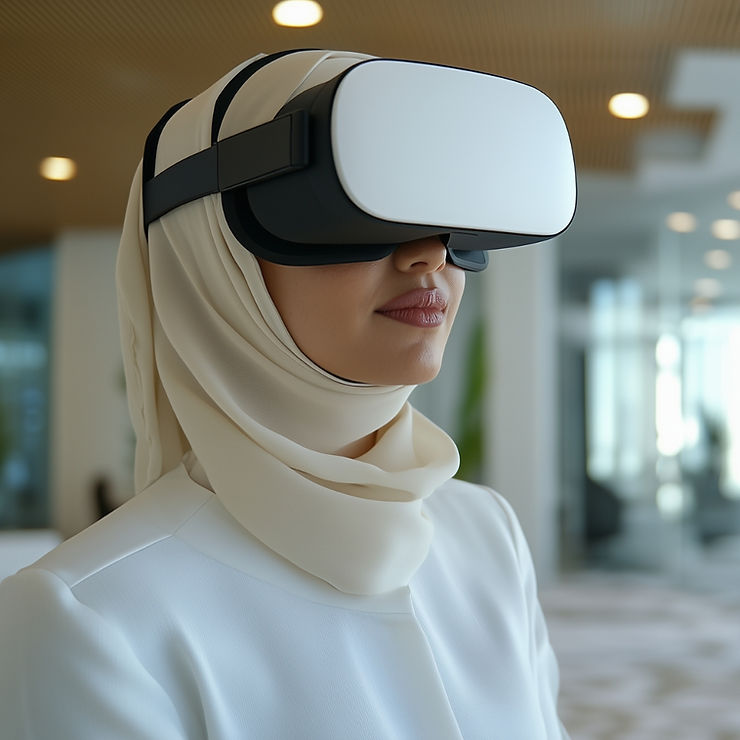
The field continues evolving rapidly. Several trends are reshaping what's possible and changing user expectations.
AI-Driven Adaptive Learning
Artificial intelligence is getting better at understanding individual learning patterns. It adapts experiences in real-time. Systems can now predict when someone is about to make a mistake. They provide just-in-time guidance.
The goal is creating training that feels like having a personal instructor. Someone who knows exactly when to step in with help. Someone who knows when to let you figure things out independently.
Advanced Haptic Feedback
Haptic feedback technology is finally catching up to visual and audio quality. New haptic systems let users feel texture, weight, and resistance in virtual environments.
This tactile element adds another layer of realism. It's particularly valuable for skills involving manual dexterity or physical manipulation.
Metaverse and VR Innovations
Virtual worlds are becoming more persistent and social. They allow for collaborative training experiences that weren't possible before. Teams can practice together regardless of physical location.
These shared virtual spaces enable new types of training scenarios. From emergency response coordination to complex project management simulations.
Future of Immersive Training
Looking ahead, immersive training is positioned to become the default approach. It's becoming standard for developing complex skills across industries. The technology will continue improving while costs decrease. This makes it accessible to organizations of all sizes.
Global Scaling and Adoption
As the technology matures and proves its value, adoption will accelerate globally. Organizations that delay implementation risk falling behind. Competitors are already building more capable workforces through immersive training.
The companies that succeed will be those that start experimenting now. They learn what works for their specific needs. They build expertise in this rapidly evolving field. Immersive training isn't just a nice-to-have technology anymore. It's becoming essential for staying competitive in skill development.
Frequently Asked Questions (FAQs)
1. How much does immersive training cost compared to traditional methods
Initial setup costs are higher due to equipment and content development. But per-learner costs drop significantly with scale. Many organizations report positive ROI within 1-2 years when implementing comprehensive training programs.
2. What equipment do I need to start with VR training
You'll need VR headsets and computers capable of running VR software. You'll also need training content or development tools. Entry-level setups can start around $1,000 per station. Enterprise solutions may cost $5,000-$10,000 per station.
3. Can immersive training work for soft skills like communication
Absolutely. VR excels at soft skills training because it can simulate realistic social interactions. It handles difficult conversations and presentation scenarios. Learners can practice without real-world consequences.
4. How do you measure the effectiveness of VR training programs
Track metrics like skill acquisition speed and knowledge retention rates. Look at real-world performance improvements, error reduction, and learner engagement scores. Many platforms provide detailed analytics on user behavior and progress.
5. Is immersive training suitable for all types of learners
Most people adapt well to VR training. Though some may experience motion sickness initially. The technology works particularly well for visual and kinesthetic learners. Adaptive systems can accommodate different learning styles and paces.
Author:
.png)
Next World
Share Article:
Author:
Next World
Share Article: