
Knowing vs doing represents one of the most dangerous gaps in workplace safety. Workers can understand procedures perfectly in training environments yet fail to execute those same procedures when conditions demand it.
This gap between knowledge and action has been studied extensively in organizational research, but nowhere are its consequences more severe than in high-risk industries where the difference between knowing what to do and actually doing it can mean the difference between a safe shift and a fatal incident.
The Nature of the Knowledge-Action Gap
The knowing vs doing gap describes what happens when people have the knowledge, skills, or ability to accomplish something but still do not act on it. This phenomenon is not about ignorance.
Workers are not failing because they never learned the procedures. They are failing because knowing what to do and being able to do it are fundamentally different capabilities that require different types of training to develop.
Cognitive science distinguishes between declarative knowledge and procedural knowledge. Declarative knowledge is factual information that workers can state or describe: the steps in a lockout/tagout procedure, the hazards associated with confined spaces, the proper sequence for emergency response.
Procedural knowledge is the ability to actually execute those steps under working conditions. These two types of knowledge are stored differently in the brain and are retrieved through different cognitive processes.
Traditional training focuses almost exclusively on declarative knowledge. Workers watch videos, read manuals, attend presentations, and take quizzes that test whether they can recognize or recall correct information.
These methods can produce workers who score perfectly on assessments while remaining completely unable to execute procedures when conditions shift from calm classrooms to pressured job sites.
The consequences in high-risk industries are severe. Research shows that despite strong performance within training simulations, workers often face persistent difficulties in hazard detection under actual field conditions. The knowledge exists, but the action capability was never developed.
Why Knowing Does Not Automatically Lead to Doing
Multiple factors prevent knowledge from translating into action, and understanding these barriers reveals why traditional training consistently fails to produce reliable performance in high-risk environments.
Stress disrupts retrieval processes. Under pressure, the brain prioritizes immediate survival responses over deliberate recall of trained procedures.
Workers who knew exactly what to do in calm conditions find themselves unable to access that knowledge when alarms sound, equipment fails, or emergencies unfold. The information learned through passive methods becomes inaccessible precisely when it matters most.
Context mismatch undermines transfer. Training that occurs in comfortable, distraction-free environments creates knowledge optimized for those conditions.
When workers must apply that knowledge in noisy, chaotic, time-pressured situations, the transfer fails. The knowing vs doing gap widens because the knowing happened in one context while the doing must happen in an entirely different one.
Cognitive overload prevents execution. High-risk work environments bombard workers with sensory information, competing priorities, and dynamic conditions.
When cognitive resources are consumed by processing the immediate environment, little capacity remains for retrieving and executing trained procedures. Workers default to familiar habits rather than applying new knowledge.
Lack of practice leaves procedural pathways weak. Declarative knowledge can be acquired through passive exposure, but procedural capability requires repeated performance.
Workers who have never physically executed emergency procedures under realistic conditions have not built the motor memory and decision patterns that enable reliable action. They know the steps but cannot perform them.
The Cost of the Gap in Safety-Critical Work
In high-risk industries, the knowing vs doing gap produces consequences that extend far beyond reduced performance. Workers who cannot execute safety procedures under actual conditions face injury and death.
Organizations face regulatory penalties, liability exposure, and reputational damage. The gap between what training records show and what workers can actually do represents unmanaged risk that compliance metrics cannot capture.
Consider evacuation drills as an example. Workers may know that they should proceed to designated assembly points, avoid elevators, and follow emergency wardens.
But when smoke fills a corridor and visibility drops to feet, that declarative knowledge provides little value unless workers have practiced navigating evacuation routes under realistic conditions. The knowing vs doing gap becomes the difference between orderly evacuation and dangerous confusion.
OSHA consistently identifies inadequate training as a key factor in workplace incidents, particularly in high-risk industries like construction. But the problem is rarely that no training occurred.
The problem is that training produced knowledge without producing action capability. Workers were taught what to do but never learned how to do it under conditions that match actual work.
Studies of serious incidents reveal a pattern: workers understood the correct procedures and could describe them accurately after the fact, but in the moment of crisis, they did not execute those procedures. This is not a knowledge problem. This is a knowing vs doing problem that traditional training methods cannot solve.
Closing the Gap Through Performance-Based Training
Bridging this gap requires training methods that build procedural capability rather than merely transferring declarative knowledge. This shift changes everything about how training is designed, delivered, and measured.
Practice under realistic conditions builds the action capability that passive learning cannot create.
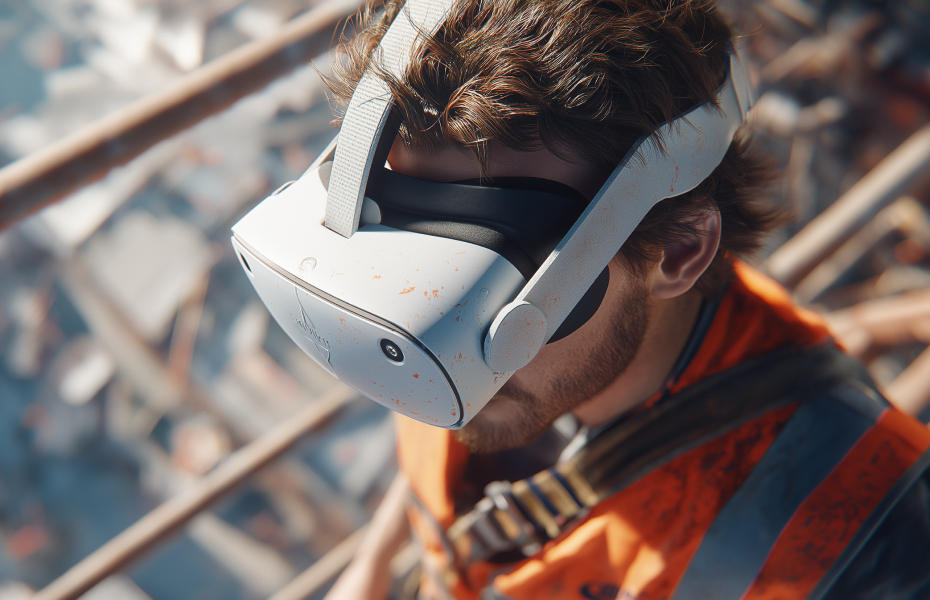
When workers must physically execute procedures during training, they develop motor memory, decision patterns, and stress responses that transfer to actual work. VR training simulators enable this practice by placing workers in realistic scenarios where they must perform rather than simply learn.
Repetition strengthens procedural pathways through use. Single training events cannot build reliable action capability regardless of content quality. Workers need multiple opportunities to practice procedures across varied conditions until correct responses become automatic. This automaticity is what separates workers who know what to do from workers who actually do it.
The VR training benefits for closing this gap are substantial. Research shows that VR learners demonstrate 75-80% retention compared to 5-20% for passive methods, and more importantly, they develop procedural capability that transfers to real-world performance. The active practice that VR enables builds both knowledge and action capability simultaneously.
Context matching ensures that training prepares workers for actual conditions. When learning occurs in environments that approximate the stress, complexity, and demands of real work, the knowledge acquired is optimized for retrieval under those conditions. Workers practice not just what to do but doing it under the conditions where action will be required.
Building a Culture That Values Doing
Organizational culture either reinforces or undermines efforts to close this gap. Safety culture that values action over documentation creates environments where procedural capability is developed, measured, and maintained.
Leaders must model the behavior they want to see. When executives and supervisors demonstrate that they value doing over knowing, workers understand that procedural capability matters. When leadership tolerates gaps between stated procedures and actual practice, workers learn that knowing is sufficient and doing is optional.
Measurement systems must focus on performance rather than completion. Organizations that track only training completion create incentives for knowing without doing. Organizations that track procedural execution, near-miss responses, and emergency drill performance create incentives for the action capability that prevents incidents.
Fear suppresses doing even when knowing is present. Workers who fear punishment for mistakes avoid practicing under conditions where they might fail. This fear prevents the very practice that would build reliable capability.
Organizations must create psychological safety that allows workers to practice, fail, learn, and improve without consequences that discourage action.
Next World delivers VR training modules designed specifically to close this gap, using active practice, realistic scenarios, and performance verification to build procedural capability that workers can execute when conditions demand it.
Frequently Asked Questions (FAQs)
1. What Is the Knowledge-Action Gap in Workplace Safety?
The gap between knowing and doing describes the difference between understanding safety procedures and being able to execute them under actual working conditions.
Workers can know exactly what to do based on training yet fail to perform those procedures when stress, time pressure, or environmental complexity interferes with retrieval and execution. This gap represents unmanaged risk that training completion metrics cannot capture.
2. Why Does Traditional Training Fail to Close This Gap?
Traditional training focuses on declarative knowledge through passive methods like videos, presentations, and readings.
These methods can produce workers who understand procedures but have never practiced executing them. Without active practice under realistic conditions, workers develop knowledge without developing the procedural capability that enables reliable action.
3. How Does Stress Affect This Gap?
Stress disrupts memory retrieval processes, making it difficult to access knowledge learned through passive methods. Workers who knew procedures perfectly in calm training environments may find that knowledge inaccessible during emergencies.
Active practice under realistic conditions builds procedural memory that remains accessible under stress, closing the gap between knowing and doing.
4. How Can VR Training Help Close This Gap?
VR training requires active performance rather than passive observation, building procedural capability alongside declarative knowledge. Workers practice executing procedures under realistic conditions, developing the motor memory and decision patterns that enable reliable action.
This active practice produces 75-80% retention compared to 5-20% for passive methods and builds capability that transfers to real-world performance.
5. How Should Organizations Measure Progress in Closing This Gap?
Move beyond training completion metrics to measure actual procedural execution. Track performance during emergency drills, near-miss responses, and regular competency assessments that require workers to demonstrate procedures rather than describe them. This measurement approach reveals the true state of knowing vs doing across your workforce.
Author:

Share Article:
Author:
Share Article: