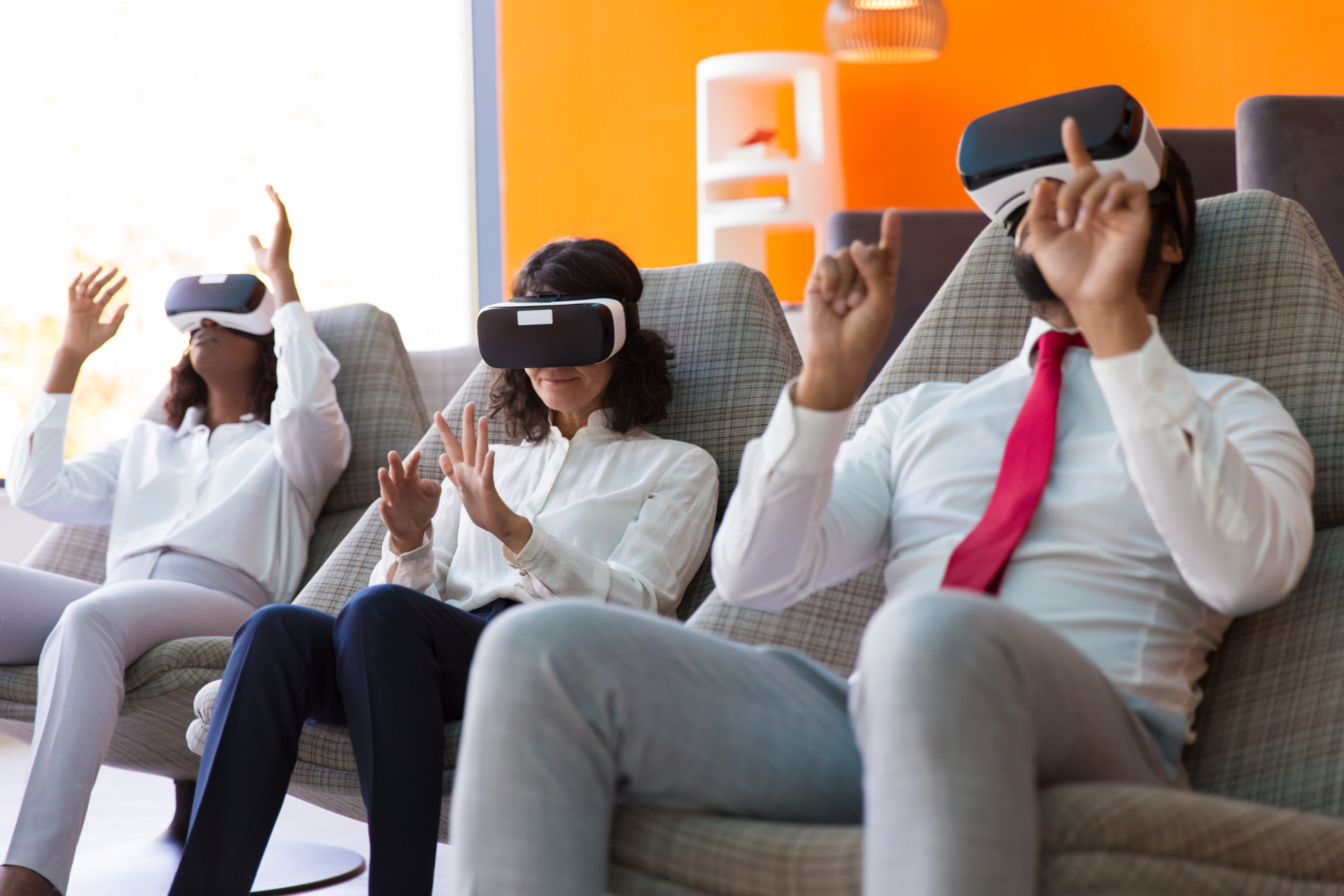
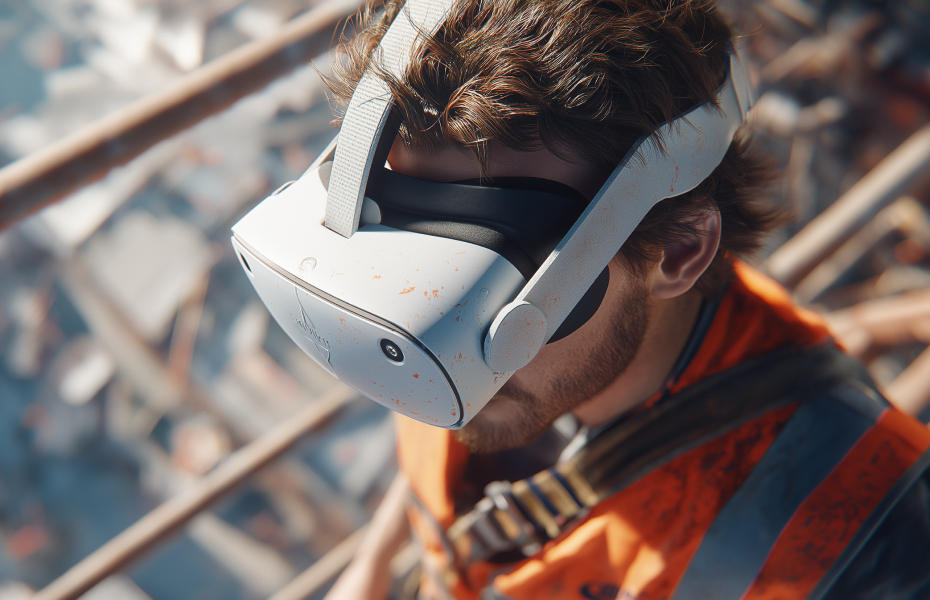
Virtual reality training benefits organizations that operate in high-risk environments by solving two persistent problems at once, poor knowledge retention and preventable workplace incidents.
Traditional safety training delivers information through classroom sessions, videos, and toolbox talks, but the passive nature of these methods means workers forget the majority of what they learn within days.
The gap between what workers are told and what they can actually do under pressure is where incidents occur. VR closes that gap by transforming training from a passive exercise into an active, immersive experience where workers practice real procedures, face realistic hazards, and build the competency that keeps them safe on the job.
The Retention Problem in Safety Training
Knowledge retention is the foundation of effective safety performance. A worker who cannot recall the correct procedure for isolating hazardous energy, securing a load, or responding to a chemical spill is a worker at risk, regardless of how many training sessions they have attended.
The challenge is well documented. Lecture-based instruction produces some of the lowest retention rates of any learning method, with workers retaining as little as five per cent of the material within weeks.
Even video-based training typically delivers retention rates between ten and twenty per cent. Workers may pass a written assessment immediately after a session, but the knowledge decays rapidly because it was never reinforced through practice.
This is not a reflection of worker ability. It reflects how the brain processes information. Passive exposure to content creates shallow memory traces that fade quickly.
Active engagement, where learners make decisions, perform tasks, and experience consequences, creates deeper encoding that persists over time. The most effective learning happens when people do rather than watch.
High-risk industries need training methods that work with this reality. When a construction worker on scaffolding, a manufacturing operator at a press, or a logistics worker near moving equipment encounters a hazard, their response depends on what they can recall and execute in the moment.
How VR Transforms Retention
VR training addresses the retention problem directly by making learning experiential. Workers wear a headset and enter a three-dimensional simulation of their workplace. They interact with equipment, identify hazards, follow procedures, and respond to scenarios that mirror the conditions they face on a real job site.
The experience engages multiple senses simultaneously and requires active decision-making throughout, creating the deep cognitive encoding that passive methods cannot achieve.
The difference in retention is substantial. Research indicates that immersive learning through VR produces retention rates of seventy-five per cent or higher, compared to the single-digit retention typical of lecture formats.
Workers remember what they practiced because their brains processed the information through action and experience rather than passive observation.
The emotional engagement of encountering a virtual hazard, such as a near-miss fall or an equipment failure, further strengthens memory formation by activating the same stress-response pathways that would engage during a real event.
Repetition reinforces this advantage. Unlike a classroom session that happens once and is forgotten, VR modules can be repeated as often as needed. Workers can revisit specific scenarios to refresh their skills, and the spaced repetition that VR enables aligns with established principles of how memory consolidates over time.
Organizations implementing virtual training programmes find that this combination of immersive experience and accessible repetition produces workers who are not just informed but genuinely competent.
How VR Reduces Incidents
Retention is only valuable if it translates into safer behaviour on the job. The connection between VR training and incident reduction works through several mechanisms.
First, VR builds procedural fluency. Workers who have physically practised a procedure in a realistic simulation can execute it more reliably under pressure than workers who have only read about it or watched it demonstrated.
This matters most for high-consequence tasks such as fall protection, lockout-tagout, confined space entry, and emergency response, where hesitation or error can be fatal.
Completing thorough safety skills training in a virtual environment gives workers the muscle memory and confidence to perform correctly when conditions on a real site become stressful or unpredictable.
Second, VR develops hazard recognition ability. Simulations can embed hazards throughout a virtual work environment and require workers to identify them before proceeding. This active scanning practice trains the perceptual skills that prevent incidents before they occur.
Research on construction equipment operators found that immersive VR training produced substantial improvements in the timely identification of critical safety hazards compared to non-immersive methods.
Third, VR allows workers to experience the consequences of unsafe decisions without physical harm. When a worker in a VR simulation fails to clip into a harness before stepping onto a platform, the simulation shows them what happens next.
This consequence-based learning creates a powerful association between the skipped step and the outcome, making it far less likely that the worker will make the same error in real life. Traditional training cannot replicate this experience safely, which is precisely why certain errors persist despite repeated instruction.
The cumulative effect is measurable. Organizations implementing VR safety training have documented significant reductions in workplace incident rates. In mining, VR training has been linked to substantial decreases in lost-time injuries. In manufacturing, companies report meaningful drops in accident frequency after introducing immersive safety modules.
Performance Data as a Training Multiplier
Beyond retention and incident reduction, virtual reality training benefits extend to the quality of data that VR platforms generate. Every session captures detailed behavioral information, which hazards each worker identified, how quickly they responded, which procedural steps they completed correctly, and where they made errors.
This data changes how organizations manage safety training. Instead of relying on attendance records and pass-fail quiz scores, safety managers gain objective evidence of individual and workforce-wide competency.
They can identify specific weaknesses, such as a pattern of workers overlooking a particular type of hazard, and address them through targeted interventions before those weaknesses produce incidents on a live site.
Performance data also supports continuous improvement in the training program itself. If a VR module consistently shows that workers struggle with a specific scenario, the content can be refined or supplemented.
If certain teams perform differently from others, the data reveals where additional support is needed. This feedback loop ensures that training evolves with the workforce rather than remaining static. Organizations that integrate VR data into their broader QHSE management systems create a connected approach where training outcomes directly inform safety strategy.
Next World builds VR training platforms around this data-driven methodology, enabling organizations to track competency development over time and demonstrate measurable safety improvements to regulators, insurers, and leadership.
Making the Case for Adoption
The business case for VR training rests on two pillars, better outcomes and sustainable economics. The retention and incident-reduction evidence is compelling, but decision-makers also need to understand the cost dynamics.
VR training carries an upfront investment in hardware and content development. However, ongoing delivery costs are significantly lower than traditional methods because VR eliminates the need for dedicated instructors, physical training facilities, equipment downtime, and worker travel.
Sessions are shorter because immersive practice builds competency faster, reducing the productivity impact of pulling workers away from their roles.
The indirect savings are equally important. Fewer incidents mean lower workers' compensation costs, reduced insurance premiums, less project downtime, and fewer regulatory penalties.
When these factors are included in the calculation, the total cost of ownership for VR training compares favorably to traditional approaches, particularly for organizations with large or geographically distributed workforces that face high training volumes.
Frequently Asked Questions (FAQs)
1. How Much Does VR Training Improve Knowledge Retention?
Research consistently shows that VR training produces retention rates of seventy-five per cent or higher, compared to five to twenty per cent for lecture and video-based methods. The immersive, active nature of VR creates deeper memory encoding that persists significantly longer than passive instruction.
2. Can VR Training Actually Reduce Workplace Incidents?
Organizations across construction, manufacturing, and mining have documented meaningful reductions in incident rates after implementing VR safety training. The improvement comes from stronger procedural fluency, better hazard recognition, and consequence-based learning that changes worker behavior on the job.
3. What Types of Safety Training Work Best in VR?
VR is most effective for high-consequence tasks where traditional training cannot safely replicate real conditions. This includes fall protection, equipment operation, confined space entry, lockout-tagout procedures, emergency evacuation, and hazard identification walkthroughs across construction, manufacturing, and energy sectors.
4. How Long Does It Take Workers to Complete VR Training?
VR training sessions are typically shorter than equivalent classroom programs because immersive practice accelerates skill acquisition. Workers often complete VR modules in a fraction of the time required for traditional instruction, with research indicating completion speeds several times faster than conventional formats.
5. How Do Virtual Reality Training Benefits Compare to Traditional Methods?
Virtual reality training benefits surpass traditional methods across every key metric, retention, engagement, competency development, and incident reduction. VR adds active practice and measurable performance data that classroom sessions, videos, and toolbox talks simply cannot provide, making it a more effective and accountable approach to safety training.
Author:

Share Article:
Author:
Share Article: