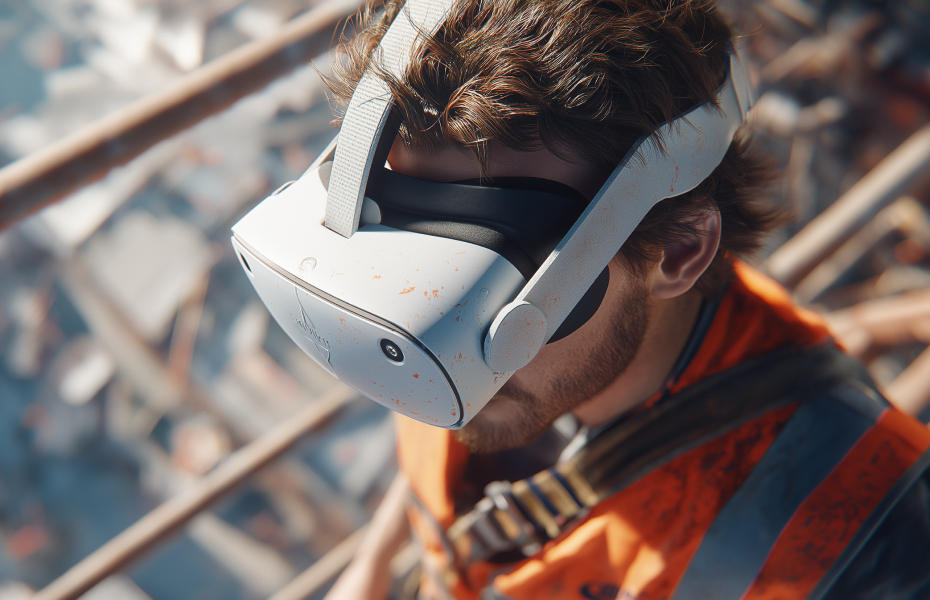
A virtual training solution might sound futuristic, but it's solving very real problems right now. Companies waste money on training that employees forget within weeks. Dangerous jobs put trainees at risk during hands-on practice. Travel costs eat budgets alive when teams are scattered globally.
That's where virtual reality training steps in. Instead of reading manuals or watching videos, employees practice actual skills in realistic simulations. They can fail safely, repeat scenarios endlessly, and build muscle memory without consequences.
Let's break down what this technology actually does and whether it makes sense for your organization.
Understanding Virtual Reality Training Technology
Think of VR training as a flight simulator, but for any job. Employees wear a headset that places them inside a 3D environment where they complete tasks, make decisions, and see immediate results.
The technology tracks their movements, measures their performance, and adapts scenarios based on their skill level. No two training sessions need to be identical.
Creating Safe Practice Environments
Here's the real advantage. A maintenance technician can practice on a million-dollar machine without breaking anything. A surgeon can perform a complex procedure without a patient on the table. A customer service rep can handle an angry client without actual consequences.
The psychological impact matters too. People learn better when they can fail privately, analyze what went wrong, and try again immediately. Traditional training rarely offers that luxury.
Comparing Conventional and VR-Based Training Methods
Traditional training typically involves classroom sessions, printed materials, and occasional hands-on practice. It's expensive to scale, hard to standardize, and impossible to repeat identically.
VR training delivers consistent experiences to every employee, regardless of location. The same scenario plays out the same way in Tokyo and Toronto. Instructors don't need to travel, and equipment doesn't need to be duplicated.
But it's not about replacing all training. VR works best for procedural skills, spatial awareness, and decision-making under pressure. Soft conversations and theoretical knowledge still benefit from human interaction.
Why Companies Choose Immersive Training Solutions
Studies show people retain information better when they physically practice it. VR creates that physical practice without physical resources.
Accelerating Learning While Reducing Workplace Hazards
Repetition builds competence. In VR, employees can repeat scenarios dozens of times in a single session. They encounter rare situations that might only happen once a year in real life, but they practice handling them until responses become automatic.
Safety improvements are measurable. According to research from PwC, VR learners feel 275% more confident applying skills learned after training compared to classroom learners. Companies training employees on hazardous equipment see fewer workplace accidents because workers have already made their mistakes in simulation.
Calculating Financial Impact and Training Efficiency
The math is straightforward. Calculate your current training costs including instructor time, travel, materials, equipment wear, and lost productivity. Compare that to VR development and deployment costs.
Most companies see ROI within 12-18 months. The break-even point comes faster when training needs to scale across hundreds or thousands of employees. One VR module trains unlimited people at nearly zero marginal cost.
Real-World Uses for Virtual Training Solutions
Different industries use VR training differently, but the underlying principles stay consistent. Practice, feedback, repetition, and safety.
Training Factory Workers and Technical Teams
Factory workers learn machine operation, safety protocols, and maintenance procedures in VR before touching actual equipment. Assembly line workers practice new processes before production lines switch over.
Complex machinery that's dangerous or expensive to operate becomes accessible for training. Technicians troubleshoot problems in simulation until they develop pattern recognition for common issues. Next World's platform offers industry-specific modules designed for manufacturing environments, from assembly line procedures to equipment maintenance protocols.
Preparing Healthcare Professionals Through Simulation
Surgeons practice new techniques in VR, building confidence before entering the operating room. Nurses rehearse emergency responses, experiencing the chaos of a code blue without actual lives at stake.
Medical students learn anatomy in 3D space, walking around organs and systems instead of studying flat diagrams. They see how bodies respond to interventions in real time. Manufacturing companies are increasingly adopting VR to train workers on complex assembly processes and quality control procedures.
Developing Communication and People Skills
Front-line employees practice difficult conversations with realistic avatars that respond unpredictably. They learn to read body language, manage their tone, and de-escalate tense situations.
Retail workers practice loss prevention scenarios, identifying suspicious behavior and intervening appropriately. Bank tellers rehearse robbery protocols in a safe environment.
Steps to Deploy VR Training in Your Organization
Starting small prevents costly mistakes. You don't need to transform all training overnight.
Choosing the Right Technology and Training Modules
Identify one high-value training need. Look for areas where current training fails consistently, costs excessively, or creates safety concerns.
Evaluate whether existing VR content fits your need or if custom development is required. Off-the-shelf solutions cost less but may not match your specific processes. Custom content costs more initially but delivers exactly what you need.
Choose hardware based on your environment. Standalone headsets work better for mobile training. Tethered systems provide higher quality for fixed training stations. The Society for Human Resource Management provides guidance on selecting appropriate VR training technology for different organizational needs.
Testing with a Small Group Before Full Rollout
Select a small group of employees representing different skill levels and demographics. Older workers might resist new technology. Non-technical employees might struggle with the interface.
Run the pilot for 4-6 weeks. Collect quantitative data on completion rates, performance scores, and time to proficiency. Gather qualitative feedback on user experience, technical issues, and perceived value.
Adjust content based on pilot results before scaling. Fix confusing interfaces, adjust difficulty curves, and address technical problems. Next World's solutions include pilot program support to help organizations test VR training before full deployment.
Expanding Across Teams and Departments
Roll out gradually across departments or locations. Build internal champions who've succeeded with VR training and can advocate for the technology.
Integrate VR data with existing learning management systems. Track completion, performance, and certification alongside traditional training metrics.
Train trainers first. They need to understand the technology, troubleshoot common issues, and help employees succeed in VR environments.
Tracking Performance Metrics That Matter
Numbers tell the real story. Track metrics that matter to your business, not just training metrics.
Documenting Productivity Gains and Cost Savings
Measure time to proficiency for new hires. If VR training reduces onboarding from three weeks to two weeks, calculate the value of that extra week of productive work.
Track error rates and quality metrics. Employees trained in VR often make fewer mistakes when performing real tasks because they've already encountered and corrected those errors in simulation. Training Industry research shows organizations can reduce training time by 40% while improving knowledge retention significantly.
Monitor safety incidents. Fewer workplace injuries translate directly to lower insurance costs, less lost time, and better employee morale.
Presenting Data to Stakeholders and Decision Makers
Document current training costs comprehensively. Include obvious expenses like instructor salaries and travel, plus hidden costs like equipment wear, production downtime, and employee time away from productive work.
Project VR training costs over three years. Include hardware, software licenses, content development, maintenance, and support. Don't forget upgrade cycles for equipment.
Calculate the difference. Factor in intangible benefits like improved employee confidence, faster skill acquisition, and better knowledge retention.
Why Next World Leads in Enterprise VR Training
Next World delivers enterprise-grade training solutions built specifically for business needs. The platform combines intuitive content creation tools with powerful analytics, letting organizations build, deploy, and measure VR training without technical expertise.
Key advantages include cloud-based deployment that eliminates hardware complexity, cross-device compatibility that works on any VR headset, and detailed performance tracking that integrates with existing systems. The platform scales from pilot programs to enterprise-wide deployments without rebuilding infrastructure.
Next World also provides ongoing support and regular updates, ensuring your training content stays current and your technology stays cutting-edge.
Frequently Asked Questions (FAQs)
1. What's the Average Investment for VR Training Technology?
Hardware costs range from $300 to $1,000 per headset depending on capabilities. Software licensing typically runs $50 to $200 per user annually. Custom content development costs $20,000 to $100,000 depending on complexity and length. Many organizations start with a $30,000 to $50,000 pilot program including hardware, software, and basic content.
2. Do Employees Need Tech Skills to Use VR Training?
Modern VR interfaces are intuitive. Most employees become comfortable within 5-10 minutes. The technology is designed for ease of use, not technical expertise. Organizations report high adoption rates across all age groups and technical skill levels when proper onboarding is provided.
3. Does VR Training Work with Existing Learning Systems?
Most enterprise VR platforms offer standard integrations with major learning management systems through SCORM or xAPI protocols. Data flows automatically, tracking completions, scores, and progress alongside traditional training metrics. Custom integrations are possible for proprietary systems.
4. How Quickly Can Custom Training Content Be Ready?
Simple scenarios take 4-8 weeks from concept to deployment. Complex multi-path simulations require 3-6 months. Timeline depends on content complexity, number of scenarios, level of interactivity, and review cycles. Working with experienced developers accelerates the process significantly.
5. What Physical Space Requirements Exist for VR Training?
Most training requires a 6x6 foot clear space per user. Seated experiences need even less. Standalone headsets eliminate cables and reduce space requirements further. Many organizations repurpose existing training rooms or create dedicated VR spaces. Mobile solutions let employees train anywhere with appropriate space.
Author:

Share Article:
Author:
Share Article: