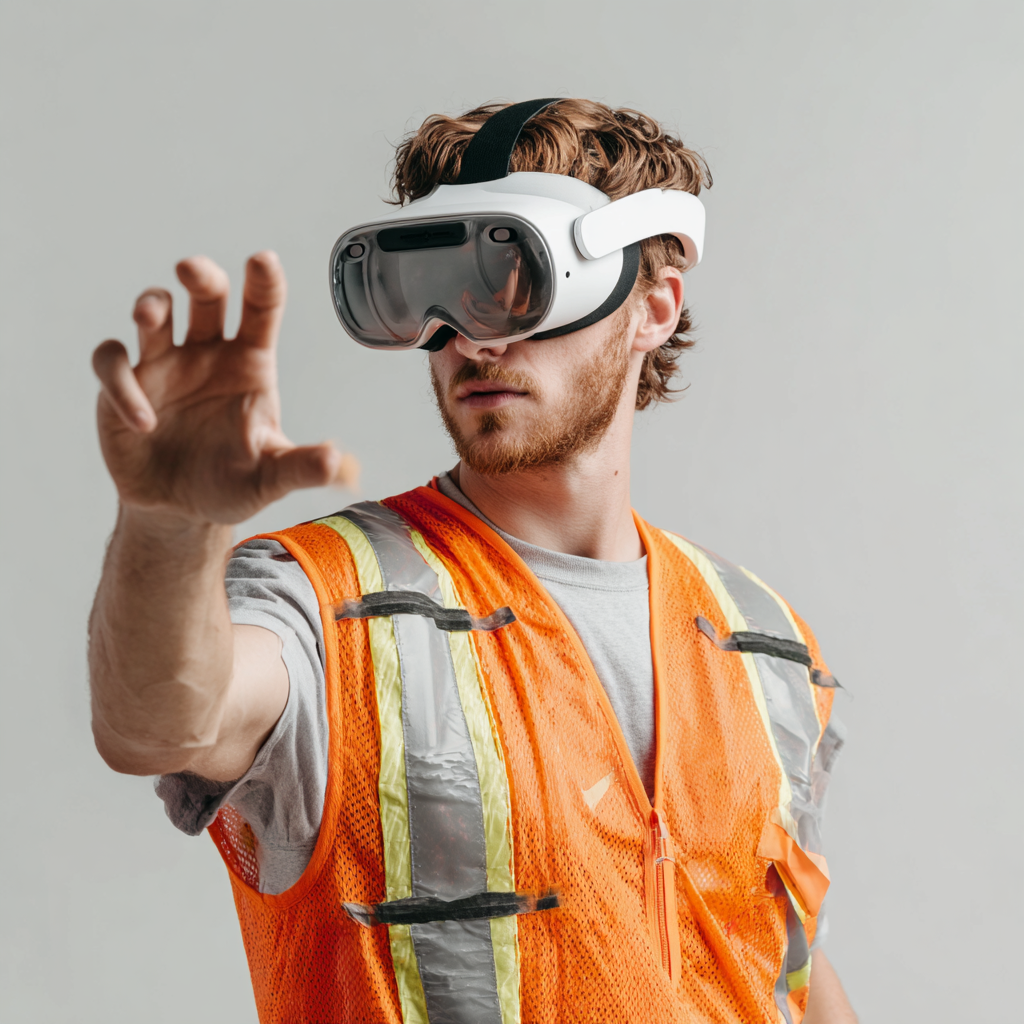
VR training examples are transforming workplace safety across industries. Companies are replacing traditional training methods with immersive headsets. These tools teach employees real-world skills before they face actual dangers.
The technology delivers measurable results. Studies show VR training increases learning effectiveness by 76 percent compared to traditional methods. Workers retain information longer and perform better under pressure.
Traditional training fails too often. Employees sit through slides and lectures. Then they're thrown into high-pressure situations with zero hands-on experience. This gap between theory and practice creates dangerous situations. VR bridges that gap by providing realistic, repeatable practice.
How VR Training Transformed Safety Programs
Fortune 500 companies bought headsets by the thousands. The data proved its value immediately.
Companies tracked workers trained in VR versus traditional methods. The results were clear. Trainees retained information better. They learned faster. They made fewer mistakes when it mattered. These vr training examples solved real problems costing businesses millions annually.
Manufacturing plants faced a universal challenge. How do you prepare someone for chaos without actual chaos? VR provided the answer.
Key benefits include:
- Simulate exact environments and pressure
- Allow unlimited practice until mastery
- Zero customer impact during training
- No equipment damage
- Complete safety for trainees
VR Training Success Metrics
The numbers prove VR's impact.
Safety Improvement Results
Safety metrics show consistent patterns after VR implementation. Companies report collision reductions between 38 to 43 percent.
Impact includes:
- Fewer workplace injuries
- Lower insurance costs
- Reduced downtime
- Safer employee outcomes
The mining sector achieved a 43 percent reduction in lost time injuries after implementing vr training examples.
Learning Engagement and Knowledge Retention
VR-trained employees are four times more focused during training than e-learning participants.
Retention rates:
- Trainees keep 80 percent of knowledge after one year
- Traditional methods lose most content within days
- VR creates lasting muscle memory
- Brain processes VR experiences as real events
Maritime Industry VR Training
Maritime workers face unique challenges. Offshore emergencies require vr training examples that replicate exact vessel conditions. The industry handles dangerous cargo, operates in extreme weather, and manages complex equipment far from shore.
Critical Training Scenarios
Maritime VR covers:
- Confined space entry
- Fire suppression procedures
- Man overboard protocols
- Equipment operation in rough seas
- Emergency evacuation drills
- Cargo handling procedures
Each scenario demands split-second decisions. Mistakes can cost lives. Traditional simulation requires expensive full-scale equipment.
Anglo-Eastern and Eastern Pacific Shipping use VR for LNG bunkering and crew training. Workers rehearse situations repeatedly. They master emergency protocols before stepping on vessels. The technology allows multiple crew members to train simultaneously from different locations.
Cost and Time Benefits
Traditional maritime training required international travel. Workers flew to Singapore, Copenhagen, or Seoul for academy courses. VR eliminates these expenses while providing unlimited practice.
Workers train on newer, larger equipment than physical simulators offer. Training centres save space and maintenance costs. Seafarers complete certifications faster without leaving home ports.
Walmart VR Training Implementation
Walmart trained over a million employees using VR headsets. This represents a complete training transformation. The company deployed headsets to 4,700 stores across the United States.
Black Friday Simulation Training
Walmart recorded actual Black Friday chaos with 360-degree cameras. They converted footage into training modules. New associates experience crowds and pressure without affecting customers.
The immersive scenarios prepare employees for the busiest retail day. Workers practice crowd management, customer service under stress, and safety protocols during peak traffic.
Training scenarios include:
- Handling difficult customers
- Identifying safety hazards
- Organising stockrooms
- Managing busy departments
- Spill response procedures
- Active shooter situations
Performance and Productivity Results
VR-trained employees scored 10 to 15 percent higher on tests than traditional trainees. They retained knowledge longer. Customer satisfaction improved with better-prepared staff.
Time savings: Training dropped from 90 minutes to 20 minutes for identical content. This efficiency scales massively when training 1.2 million employees.
Revenue impact: Stores using vr training examples saw sales increases of 10 to 15 percent during peak periods. Better-prepared staff handle pressure more effectively. Trainees report 30 percent higher satisfaction rates with VR versus classroom training.
Automotive Sector VR Training
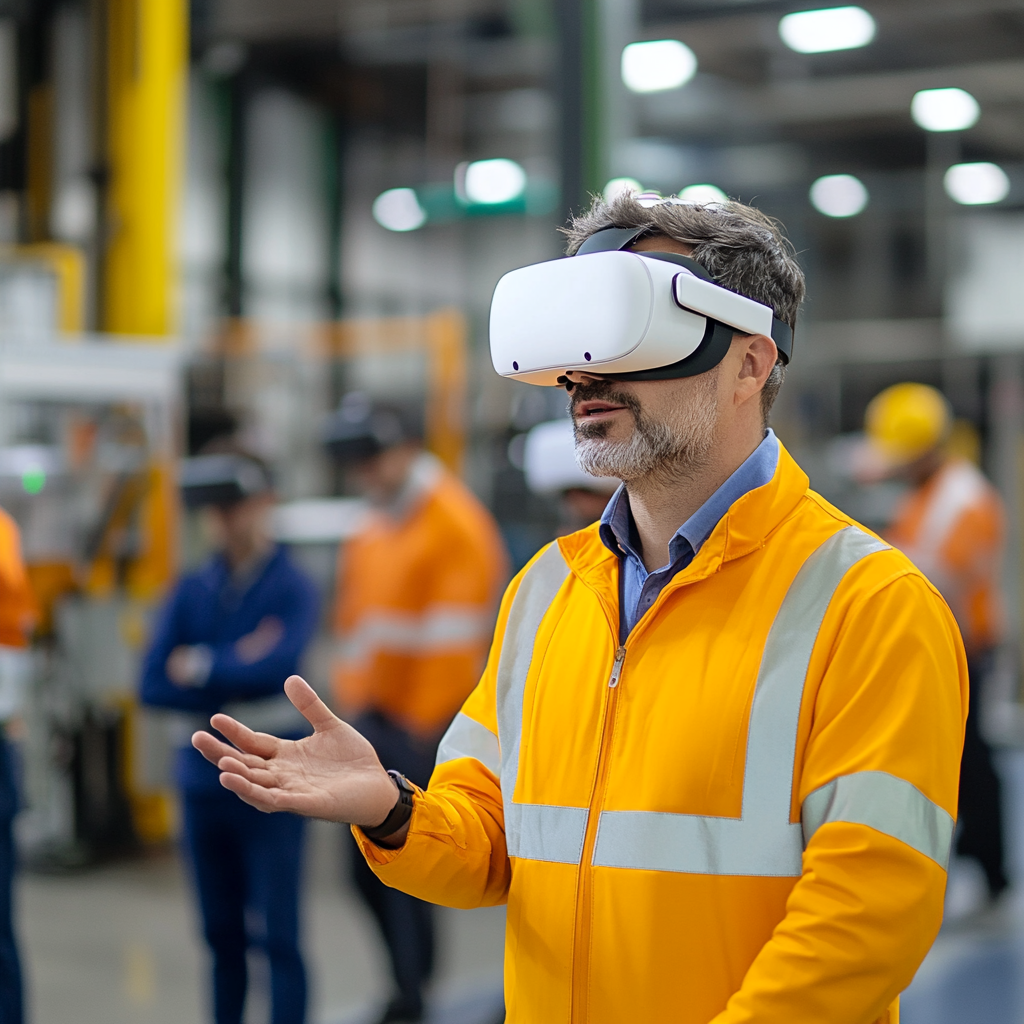
The automotive sector adopted VR early. One assembly line mistake costs significant money. The industry faces a technician shortage and increasingly complex vehicle systems. Electric vehicles require specialised training that traditional methods struggle to provide.
Technical Training for Mechanics
Ford developed VR training for Mustang Mach-E high-voltage system training using enterprise VR headsets. Trainees interact with 3D models and learn component operation. The programme prepares technicians for electric vehicle maintenance without accessing physical vehicles.
Benefits include:
- No waiting for physical equipment
- Zero risk to expensive prototypes
- Unlimited procedure repetition
- Complete system visualisation
- Safe high-voltage training
Ford reduced workplace injuries by 70 percent by analysing VR training data. They improved real assembly processes based on insights gained. The data revealed ergonomic issues invisible in traditional training.
Production Line Optimisation
Audi developed VR systems for logistics employees. The gamification approach improves learning progress. Workers learn optimal loading patterns and ergonomic techniques. They understand their role in production flow.
Volkswagen planned to train 10,000 employees using VR in 2018. They developed 30 simulation programmes across different fields.
Results: Fewer errors, less waste, better productivity. New hires reach full speed faster through virtual practice. Assembly line efficiency improves when workers understand the complete production process.
Energy Industry VR Applications
Energy companies face life-and-death training stakes. Natural gas and offshore operations require immersive safety training.
Safety Training Protocols
New Jersey Natural Gas implemented VR training for gas-specific training modules. Workers encounter simulated leaks, equipment failures, and emergency shutdowns.
Training advantages:
- Continued operations during COVID-19
- Overcame age demographic barriers
- Increased visual learner engagement
- Provided live practice opportunities
Shell simulates offshore oil rigs in VR. Employees learn emergency protocols in virtual environments. They practise decisions dozens of times before working on real rigs.
Cost Reduction Through VR
Traditional energy training required expensive equipment and specialised facilities. One VR headset simulates thousands of scenarios. Training scales without new facilities or duplicate equipment.
Every trainee receives identical preparation. No instructor quality variation. No scheduling conflicts.
UPS Transportation VR Training
Transportation involves inherent risks. VR helps drivers prepare for real-world challenges.
Driver Safety Simulations
UPS implemented VR across Integrad facilities. Drivers experience realistic city environments before operating vehicles. They identify hazards verbally using "Hazard left" and "Hazard right" commands.
Simulated scenarios include:
- Pedestrian interactions
- Parked vehicle navigation
- Oncoming traffic management
- Defensive driving techniques
Results achieved:
- 38 percent collision reduction
- 75 percent training time decrease (8 to 2 hours)
- 52 percent driver retention increase
- $343 million safety investment in 2022
Regulatory Compliance Training
Transportation compliance involves complex, changing regulations. Traditional training uses documents and tests.
VR provides contextual scenario-based learning. Drivers apply regulations in realistic situations. They understand rule purposes and violation consequences.
VR Platform Integration Capabilities
Integration with existing systems amplifies VR training impact.
Learning Management System Features
Modern VR platforms connect to company LMS directly. Integration tracks progress and analyses performance. Managers identify training gaps instantly.
Data flow benefits:
- Automatic content updates to headsets
- Completion tracking to corporate systems
- Seamless automation
- Eliminated manual processes
Global Training Deployment
VR content translates efficiently across languages. Voice-overs, text overlays, and instructions adapt without rebuilding programmes.
Factory workers worldwide receive identical training quality. The vr training examples work universally across regions.
Conclusion
VR training examples from Walmart, UPS, Ford, Shell, and New Jersey Natural Gas prove this technology delivers superior results. Accident rates drop. Learning accelerates. Costs decrease. Employee confidence soars.
This represents current best practice. Companies using outdated training methods fall behind competitors who adopted VR.
NextWorldXR builds VR training solutions that solve real business problems. Effective vr training examples address actual challenges, not just showcase technology.
Frequently Asked Questions (FAQs)
1. How much does VR training typically cost compared to traditional methods?
Initial VR implementation requires investment in headsets and content development. Most companies report ROI within the first year. Cost savings come from reduced training time, fewer accidents, and better retention.
2. What industries benefit most from VR training implementations?
High-risk environments benefit substantially. Manufacturing, transportation, energy, healthcare, retail, and maritime show the strongest results. Any company valuing safety and efficient training gains from well-designed vr training examples.
3. How long does it take employees to become comfortable with VR technology?
Most people adapt within minutes. The technology is intuitive. Companies report minimal resistance, especially among younger workers. Immersion increases engagement.
4. Can VR training completely replace hands-on training?
Not entirely. VR dramatically reduces hands-on time needed. It builds foundational skills before real-world practice. Most companies use VR for initial training and dangerous scenarios while maintaining some hands-on components.
5. What's the average reduction in training time with VR implementation?
Studies show reductions between 40 to 75 percent. UPS cut training from 8 hours to 2 hours. Walmart reduced 90-minute modules to 20 minutes. Savings come from focused learning through effective vr training examples.
Author:

Share Article:
Author:
Share Article: